Austria Flag, Capital and Country Facts
Austria is a landlocked Central European country whose red-white-red flag is easy to recognise but worth examining closely. Its plain national flag differs from the federal service flag with the eagle. Vienna is both the federal capital and one of nine federal states; the Alps, the Danube valley and lake landscapes provide a geographic framework for understanding the country beyond its capital.
Test your knowledge →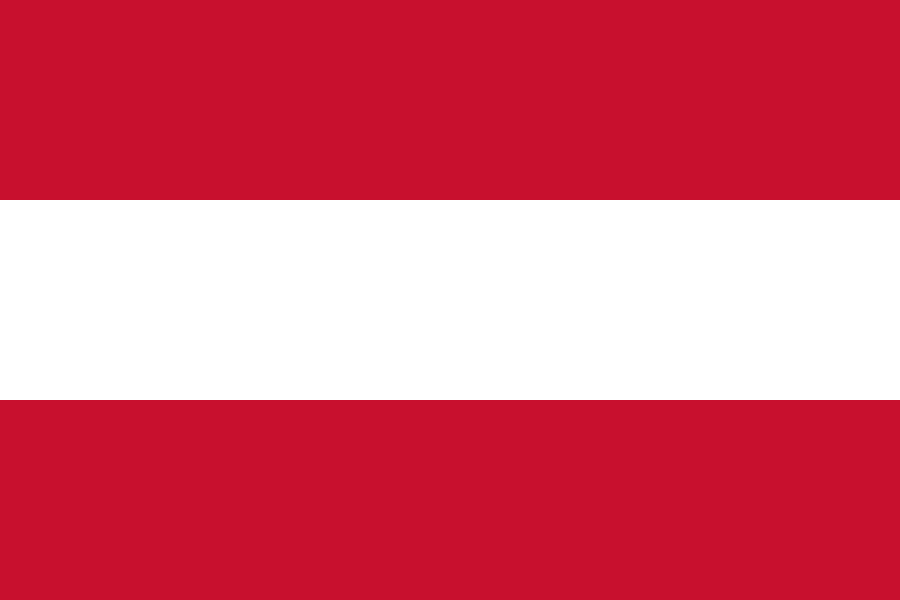
Austria at a glance
- Capital
- Vienna
- Quiz continent
- Europe
- Languages in reference record
- German is the state language; legally established rights of linguistic minorities remain protected.
- Currency
- Euro (EUR); member of the euro area since 1 January 1999, with euro notes and coins introduced in 2002.
- Population
- 9,215,956 (1 January 2026, final Statistics Austria result)
- Area
- 83,884.92 km²
- Coastal setting
- Landlocked
- ISO codes
- AT / AUT
- Internet country suffix
- .at
- Highest mountain
- Großglockner, 3,798 m
- River
- Danube
- Federal states
- 9, including Vienna
- National Day
- 26 October
- EU accession
- 1 January 1995
- International vehicle sign
- A
Austria Flag: Design, Meaning and History
The plain Austrian national flag has three equally wide horizontal bands: red at the top, white in the middle and red at the bottom. It contains no eagle or other emblem. These equal bands are the most useful recognition feature when comparing it with other red-and-white flags.
The federal service flag adds Austria’s coat of arms at the centre. The eagle and its surrounding details extend into the red bands. This is a distinct official variant rather than an element missing from the plain national flag. Section 3 of the Coat of Arms Act explicitly specifies a 2:3 ratio for the federal service flag; that provision should not be described as a legal ratio for every civilian Austrian flag.
The red-white-red shield is documented on an equestrian seal of Duke Frederick II attached to a charter for Lilienfeld Abbey dated 30 November 1230. The familiar tale of Duke Leopold V’s blood-stained tunic at Acre is an origin legend, not a documented account of a flag being invented in one event. The historical record and the traditional story should therefore remain separate.
Austria’s state colours were established on 31 October 1918. That date is distinct from the later republican flag and coat-of-arms legislation of 1919. A colour scheme, a particular emblem and the law governing a specific official flag are related subjects, but they need not share the same adoption date.
Latvia provides a useful comparison. Its darker carmine-red bands surround a narrower white stripe, with a 2:1:2 stripe relationship. Austria’s three bands are equal, or 1:1:1. Remembering the proportions as well as the colour difference is more reliable than remembering only that both flags are red and white.
Capital: Vienna
Vienna is Austria’s federal capital and a federal state in its own right. It is not part of the surrounding state of Lower Austria. The distinction matters when learning regional capitals: Vienna serves Austria at the federal level, while St Pölten is the capital of Lower Austria.
The federal structure comprises nine states: Burgenland, Carinthia, Lower Austria, Upper Austria, Salzburg, Styria, Tyrol, Vorarlberg and Vienna. Their capitals are Eisenstadt, Klagenfurt am Wörthersee, St Pölten, Linz, Salzburg, Graz, Innsbruck, Bregenz and Vienna respectively. A city and its surrounding region can share a name without being the same territory; Salzburg is a useful example.
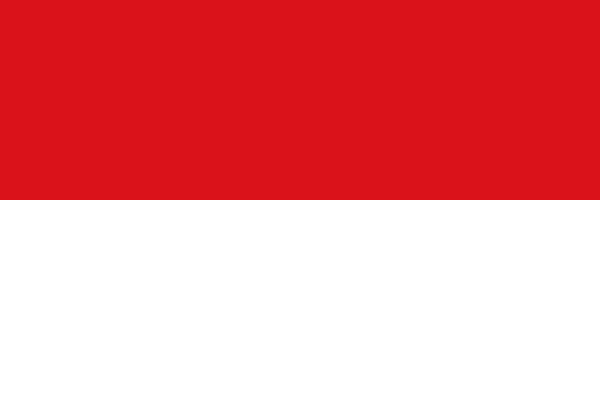
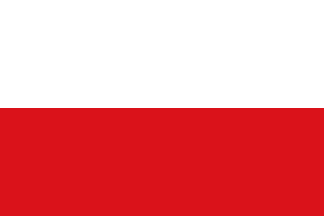
Vienna’s own plain city flag is red above white, rather than the national flag’s red-white-red. The Austrian regional collection also includes a Vienna variant with arms. National, city and armorial regional images should be compared as the particular variants shown, rather than treated as interchangeable pictures of the same flag.
Practise this capital →Austria: Geography, History and Culture
Austria has land borders with eight countries: Germany, Czechia, Slovakia, Hungary, Slovenia, Italy, Switzerland and Liechtenstein. These neighbours place it between several parts of Central Europe. Being landlocked is a geographic description, not a statement that rivers, transport routes or international connections are unimportant.
The Alps are a major part of Austria’s landscape, alongside the Danube valley and lake regions. The Großglockner, at 3,798 metres, is the country’s highest mountain in the supplied source record. Mountain landscapes and river corridors provide different ways to understand movement, settlement and regional variety within the same country.
Population figures need a reference date. Statistics Austria’s final result for 1 January 2026 is 9,215,956 residents. This supersedes an earlier provisional figure and should not be presented as a live population count. The retained area reference gives 83,884.92 square kilometres; a rounded description of about 83,900 square kilometres avoids disguising differences between source conventions.
German is the state language, while the rights legally granted to linguistic minorities remain protected. The constitutional description is more precise than assuming that everyone in Austria has an identical linguistic background. The country is a federal parliamentary republic, with responsibilities shared between federal institutions and the states.
Austria joined the European Union on 1 January 1995. Participation in the euro area dates from 1 January 1999, while euro cash entered use in 2002. These dates describe different institutional and monetary steps. EU accession, the start of the euro area and the arrival of coins and notes should not be collapsed into one event.
National Day and neutrality
Austria’s National Day is 26 October. The date recalls the neutrality decision of 26 October 1955; National Day has been observed under that name since 1965. The historical decision and the later designation of the holiday are separate dates.
Schönbrunn Zoo
Tiergarten Schönbrunn in Vienna was founded in 1752 and is described by its institutional source as the world’s oldest zoo. Its history offers another way to connect the capital with a specific, dated institution rather than a general description of an old European city.
Names, food and country identifiers
Wiener Schnitzel, Apfelstrudel and Kaiserschmarrn are among the specialties retained in the source profile. Different identifiers serve different purposes: AT is the country code used here, A is the international vehicle distinguishing sign and .at is the country-code internet domain.
Explore neighbouring and related places
 Czechia
 Germany
 Hungary
 Italy
 Liechtenstein
 Slovakia
Cities and regions in this country
 Vienna
 Salzburg
 Graz
 Linz
 Innsbruck
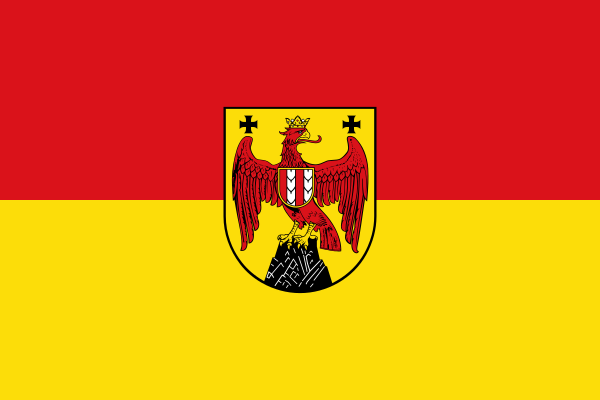 Burgenland
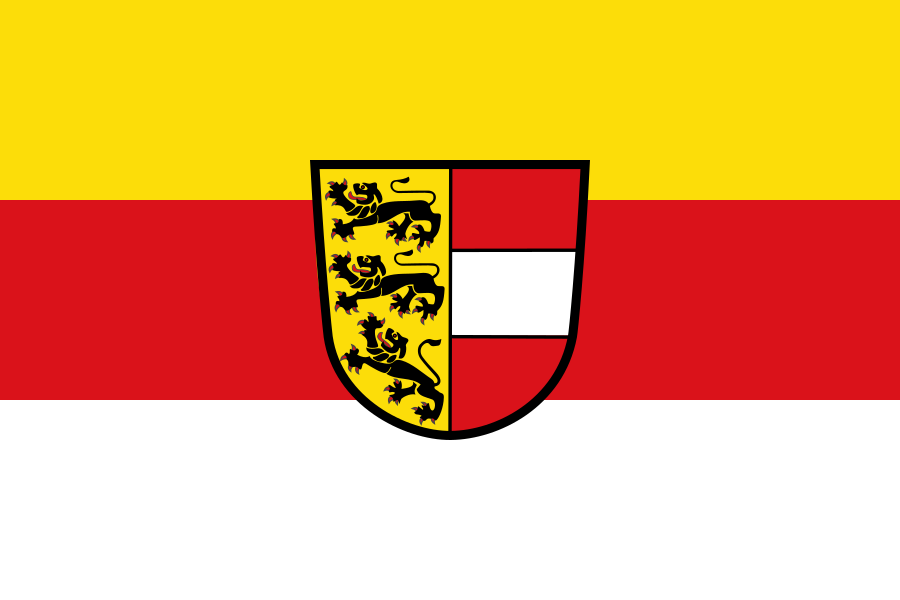 Carinthia
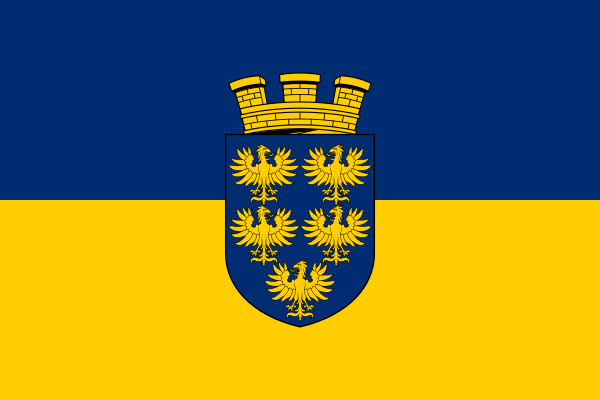 Lower Austria
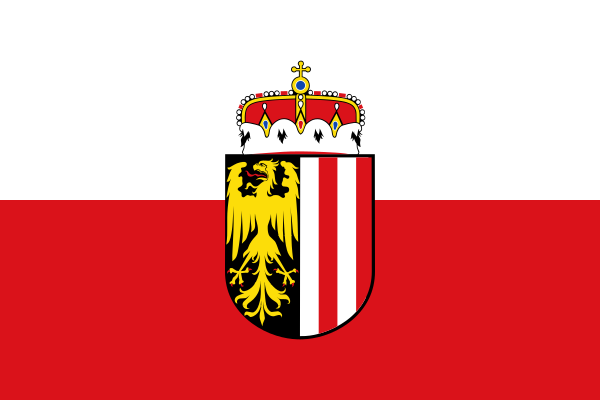 Upper Austria
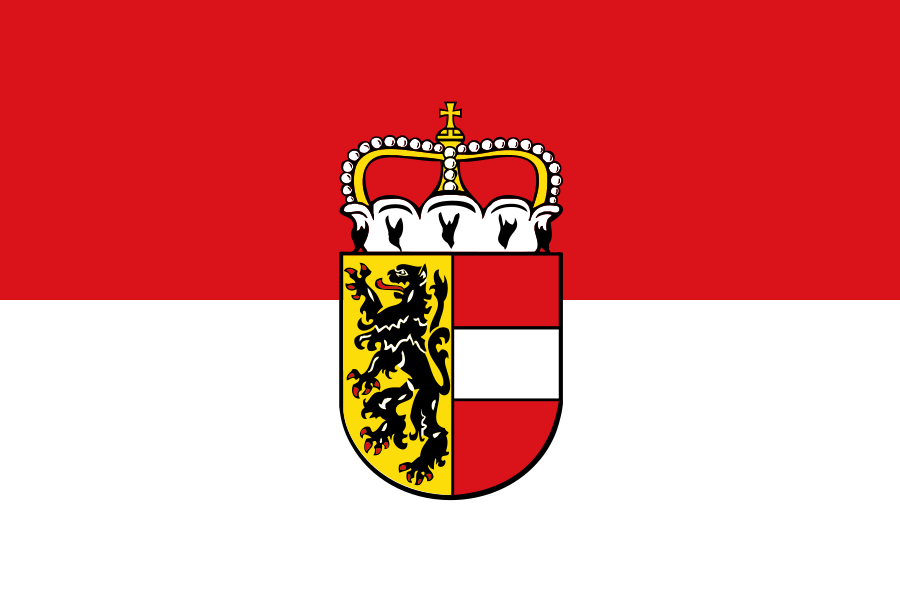 Salzburg
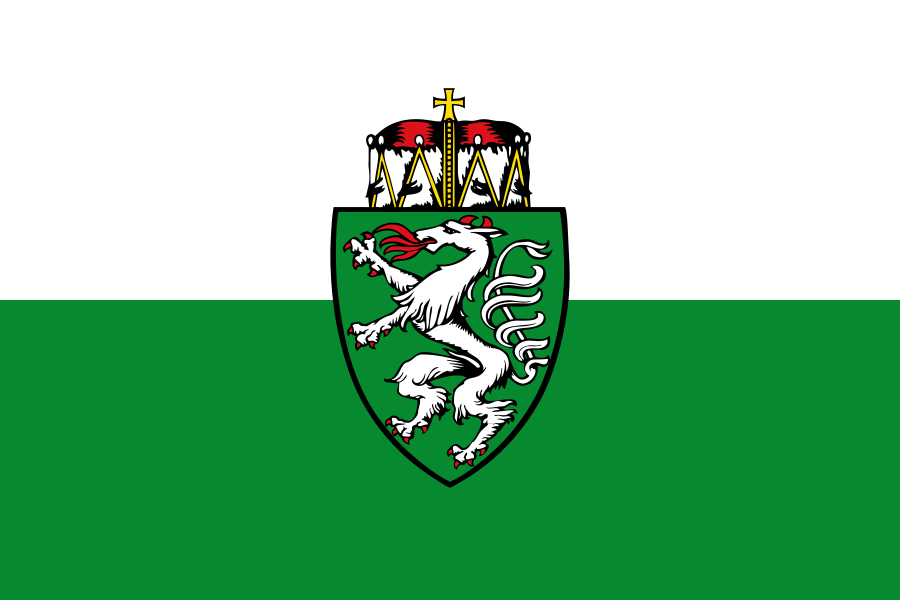 Styria
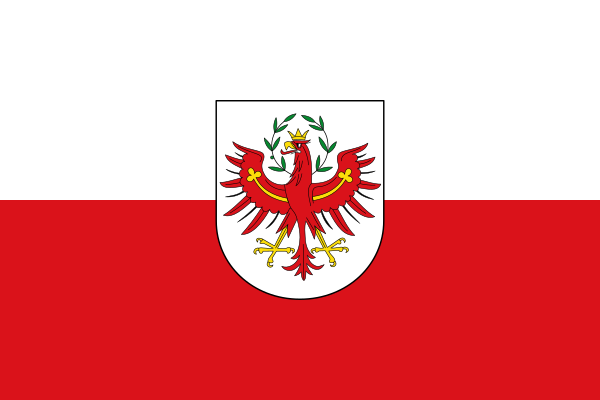 Tyrol
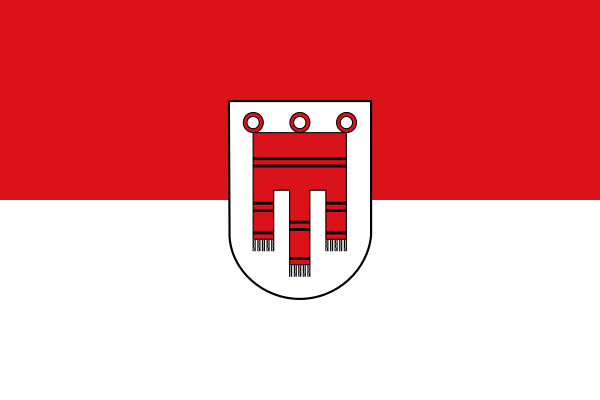 Vorarlberg
What did you discover?
Sources and image credits
This English article draws on the institutional sources listed below. Figures and memberships retain their stated reference dates.
Source record: 2 November 2026. A translation does not change the reference date of a figure or membership list.
- github.com/factbook/factbook.json/blob/144d6977b2b01ac1cbd220de754c0a005616760b/europe/au.json
- data.worldbank.org/indicator/SP.POP.TOTL
- github.com/mledoze/countries
- statistik.at/statistiken/bevoelkerung-und-soziales/bevoelkerung/bevoelkerungsstand/bevoelkerung-zu-jahres-/-quartalsanfang
- statistik.at/en/services/tools/regional-international-data/regional-information/regional-divisions
- european-union.europa.eu/principles-countries-history/eu-countries/austria_de
- ecb.europa.eu/euro/intro/html/index.de.html
- migration.gv.at/de/leben-und-arbeiten-in-oesterreich/oesterreich-stellt-sich-vor/geografie-und-bevoelkerung/
- bmeia.gv.at/oev-wien/about-austria/geography
- bmeia.gv.at/fileadmin/user_upload/Zentrale/Integration/Willkommen_in_Oesterreich.pdf
- parlament.gv.at/verstehen/politisches-system/bund-laender
- ris.bka.gv.at/NormDokument.wxe
- ris.bka.gv.at/eli/bgbl/1930/1/A8a/NOR40045733
- ris.bka.gv.at/NormDokument.wxe
- bmi.gv.at/magazinfiles/2006/11_12/files/wappen_und_flaggen.pdf
- parlament.gv.at/aktuelles/pk/jahr_2018/pk1137
- austria.info/de-de/planung/oesterreich-fuer-schuelerinnen/
- parlament.gv.at/verstehen/historisches/1945-1995/staatsvertrag
- zoovienna.at/ueber-uns/tiergarten-schonbrunn/
- austria.info/de-de/inspiration/kulinarik/kulinarik-wien/
- unece.org/sites/default/files/datastore/fileadmin/DAM/trans/danger/publi/ECOSOC_Competent_authorities/COUNTRY_IDENTIFICATION_CODE.pdf
- nic.at/de/so-funktioniert-at/faqs/domain-einsteiger
- ecb.europa.eu/stats/money/mfi/general/html/codes_MFI.fi.html
- likumi.lv/ta/en/id/200642-law-on-the-national-flag-of-latvia