Graz: City Flag, History and Identity
Graz is located on the Mur and is the capital of Styria. There is a long history of residence between Schlossberg and the old town, while Kunsthaus and Murinsel stand for more recent architectural interventions. The green-white city flag is simply set up. In order to get to know Graz, it is therefore worthwhile in addition to the colors especially the view of the river, hills and districts.
Test your knowledge →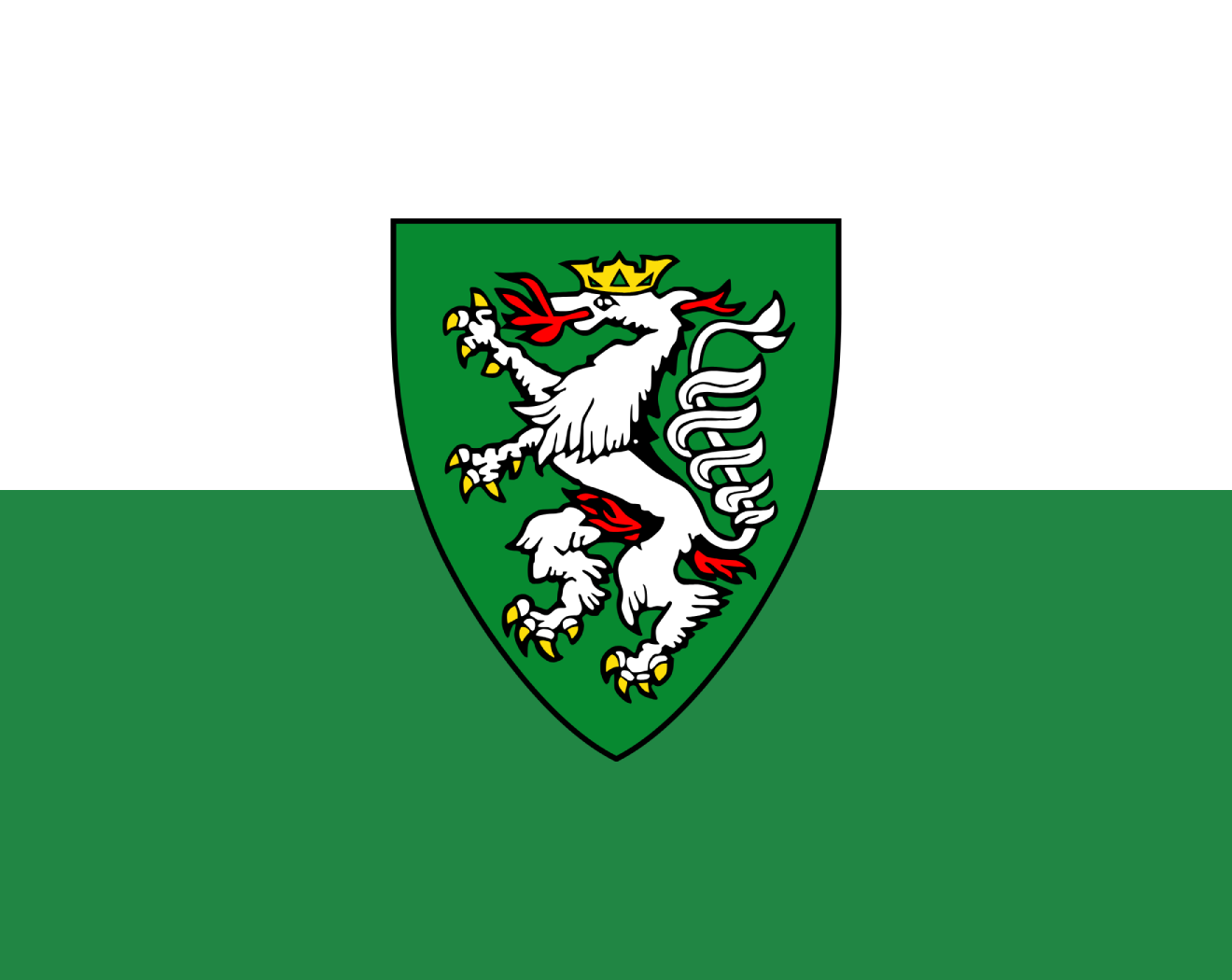
Graz at a glance
- Name
- Graz
- Country
- Austria
- Profile type
- City
- Urban river
- Murder
- World Heritage Reception Old Town
- 1999
- World Heritage Extension
- Eggenberg Castle since 2010
- Castle construction
- Eggenberg after 1625
- Castle architect
- Giovanni Pietro de Pomis
- Capital of Culture Year
- 2003
- Modern river construction
- Murinsel as an anchored floating platform
- Preserved landmark
- Clock tower preserved after fortification destruction in 1809
The Flag of Graz
The Graz flag shown has a white track above and a green horizontal track below. In the middle is the city coat of arms: a green sign with a white panther. The coat of arms is strongly stylized and distinguishes this representation from a mere white-green two-color flag. For the quiz, therefore, both the city colors and the placed sign count.
White and green also meet in other Styrian contexts. From the color combination alone, therefore, no clear administrative assignment can be derived. This page expressly refers to the city of Graz. Their coat of arms and the actual order white over green belong to the concrete illustration; the city and the federal state of Styria are different administrative levels.
Graz: Location and Territorial Role
Graz is located in the southeast of Austria on the Mur. The river is one of the main spatial reference lines of the city centre. The Schlossberg rises directly next to the historic core and makes the location of older districts easy to understand. The state capital performs administrative tasks for Styria, but at the same time has its own municipal area.
The World Heritage Site connects the historic center with Eggenberg Castle. It thus comprises two spatially distinguishable regions which belong together. In the center, medieval street spaces meet Renaissance courts and baroque buildings. Eggenberg complements these urban spaces with a stately castle complex with a park, the creation of which was also closely linked to political power and representation.
Landscape, History and Culture
The location between the Alpine region, the Balkans and the Mediterranean encouraged cultural exchange. These connections are reflected in the architectural styles of the old town. The Schlossberg was also a strategic place; its fortification shaped the development of the settlement. Today’s perception as a viewing hill and green town thus complements an older history of defense and domination.
In 1999, the historic centre of Graz became a UNESCO World Heritage site, and in 2010, Schloss Eggenberg was added. The time-separated recording explains the current name of the site. The castle was built after 1625 according to plans by Giovanni Pietro de Pomis. His regular architecture transformed the client’s ideas of order and representation into built forms.
With Kunsthaus and Murinsel, the 2003 Year of Cultural Capital produced two particularly visible signs of modern Graz. Murinsel is not a naturally formed island, but a floating platform anchored in the river. Via bridges, it is connected to both banks and thus connects location, point of view and crossing possibilities within the city.
Schlossberg and Clock Tower
The clock tower is one of the most familiar Graz landmarks. When the fortress was largely destroyed in 1809, it could be ransomed and preserved. Its peaceful effect today therefore also tells a story of conscious preservation. From Schlossberg, the old town, river and younger buildings can be recognized as a coherent urban landscape.
Eggenberg Castle
The castle and park complement the city centre with another form of aristocratic representation. The UNESCO Commission describes four corner towers, 365 exterior windows and 24 state rooms as parts of a symbolic order. These figures refer to the historical design concept of the plant and make the claim of architecture particularly clear.
Murinsel and Kunsthaus
The two projects of 2003 can be compared well with the older city. The Kunsthaus sets a clearly contemporary building next to historical structures. The Murinsel, on the other hand, occupies the river itself with a walk-in construction. Together they show how Graz has expanded its role as a city of culture through new spaces and new gaze relationships.
Explore this country and nearby profiles
 Austria
 Vienna
 Salzburg
 Linz
 Innsbruck
 Burgenland
 Carinthia
What did you discover?
Take this flag into the quiz
Sources and image credits
This English article draws on the institutional sources listed below. Figures and memberships retain their stated reference dates.
Source record: 2 November 2026. A translation does not change the reference date of a figure or membership list.
- unesco.at/kultur/welterbe/unesco-welterbe-in-oesterreich/stadt-graz-historisches-zentrum-und-schloss-eggenberg/
- graz.at/cms/ziel/7775994/
- service.graztourismus.at/de/sightseeing-kultur/sehenswuerdigkeiten/murinsel_shg_1470
- graztourismus.at/de/sightseeing-kultur/sehenswuerdigkeiten/sehenswertes-am-schlossberg
- commons.wikimedia.org/wiki/File%3AFlag_of_Graz.svg