Collective Security Treaty Organization: Flag, History and Membership
The Organization of the Collective Security Treaty, usually called CSTO or English CSTO, uses a blue flag with a fortifying shield and golden wreath. Its roots lie in a 1992 security treaty. The formal circle of six Member States must be distinguished from actual cooperation: Armenia has frozen its participation since 2024.
Test your knowledge →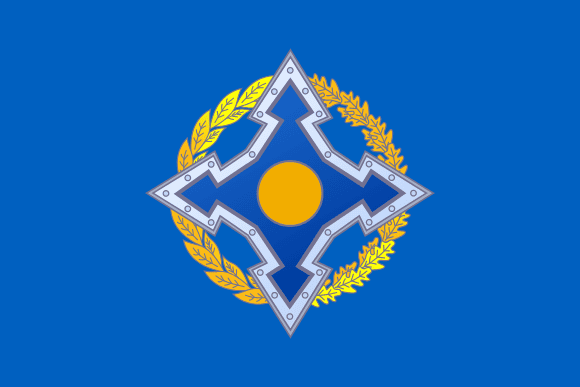
Key facts and distinctions
- Article focus
- International organisation
- Membership record
- 1 November 2026
- Linked country entries
- 6
- List definition
- Country subset of the supplied member record
- Abbreviations
- CSTO/CSTO
- Origin Contract
- 15 May 1992, Tashkent
- Treaty in force
- 20 April 1994
- Form of organisation
- Since 2002
- Formal members
- 6, as of 01.11.2026
- Armenia
- Participation frozen since 2024
- Decision on symbols
- 30 November 2017
- Emblem
- Fortress shield, golden ball, leaf wreath
Fortress shield, ball and wreath
The emblem shows a blue, silver-framed shield in the form of a square fortress. In its middle is a golden ball. A golden wreath of laurel and oak leaves surrounds the sign. On the flag, this complex emblem stands out from the single-color blue background; it is not a ring of six national flags.
The decision of 30 November 2017 explicitly explains the symbolism. The fortress form is intended to express the non-offensive character of the organization, the sphere unity and common goals, the leaf wreath courage and bravery. These statements are the institutional self-description. The defence motive presented does not lead to an independent evaluation of concrete political or military actions.
From Security Contract to Organization
The Collective Security Treaty was signed in Tashkent on 15 May 1992 and entered into force in 1994. Article 4 treats an attack on a State Party as an attack on all. Contract, later institutional foundation and today’s membership are different levels; their data must not be mixed together in learning.
In 2002, the cooperation received its current organizational form. Historic development included admissions, non-renewals and suspended memberships. Thus, despite its role in the original treaty, Uzbekistan does not belong to today’s circle of six. A list of signatories from 1992 therefore does not answer the same question as an up-to-date list of formal CSTO members.
Formal membership is not active participation
The official membership circle includes Armenia, Belarus, Kazakhstan, Kyrgyzstan, Russia and Tajikistan. However, Armenia’s government stopped participating in the activities. At the end of October 2026, she affirmed that she did not seek a return to active cooperation. This political distancing is essential for the understanding of the alliance and must not become invisible by a mere number of countries.
The site continues to treat Armenia as a formal member as of the deadline and at the same time marks its frozen participation. Statements about future exclusion or return are not already effective decisions. The supreme body is the Council for Collective Security. Its institutional existence and cooperation in the alliance can be described objectively without taking on the self-expression of individual participants.
Details Worth Remembering
An alliance sign with an official declaration
For some flags, meanings are only handed down. Here, an official decision describes the individual elements and their desired statement. This enables a precise symbol explanation. At the same time, the necessary distinction between normative claim and observable politics remains: the source explains what the sign means.
Armenia makes the counting question visible
Six formal members does not mean six equally active participants. Armenia’s frozen cooperation shows particularly clearly why organizational affiliation and political practice must be presented separately. For a clearly solvable quiz question, the addition of a formal member to the specified deadline is therefore more helpful than an indefinite one.
Two founding dates usefully read
1992 denotes the origin of the treaty, 2002 the transformation into today's organization. Both data are correct when their meaning is mentioned. Similarly, the 2017 symbolic decision concerns the official regulation of signs and must not appear as the founding year of security cooperation.
The illustrated signs and variants
Countries in the supplied learning record
These links cover countries represented in this site’s country database. Any territories, regional governments, observer categories or participation qualifications are discussed above. Counts are not interchangeable.
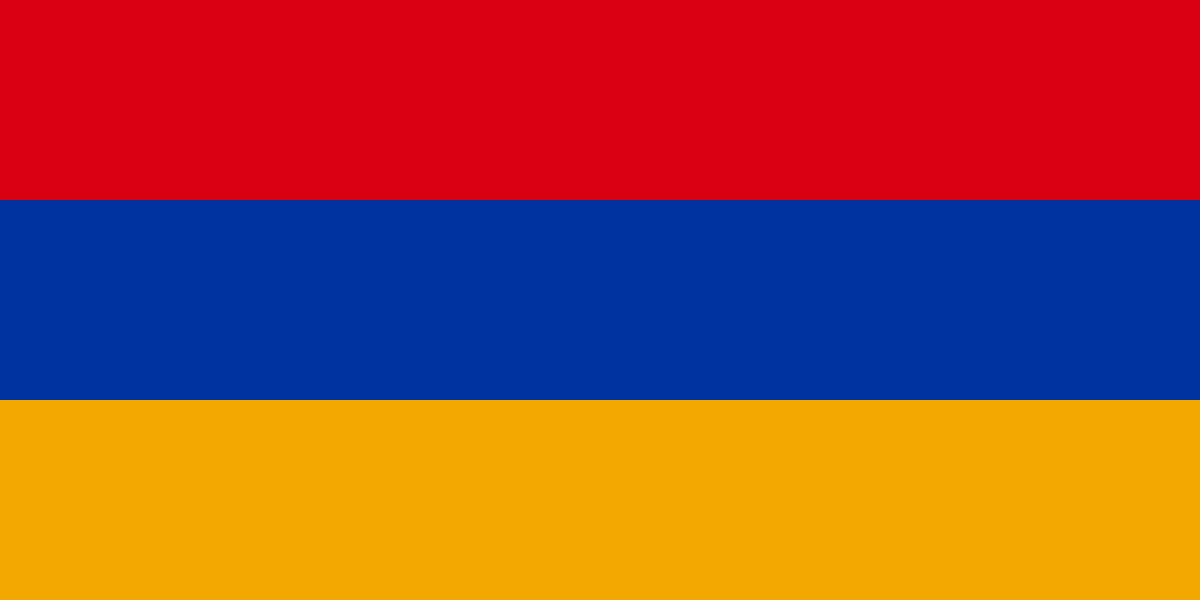 Armenia
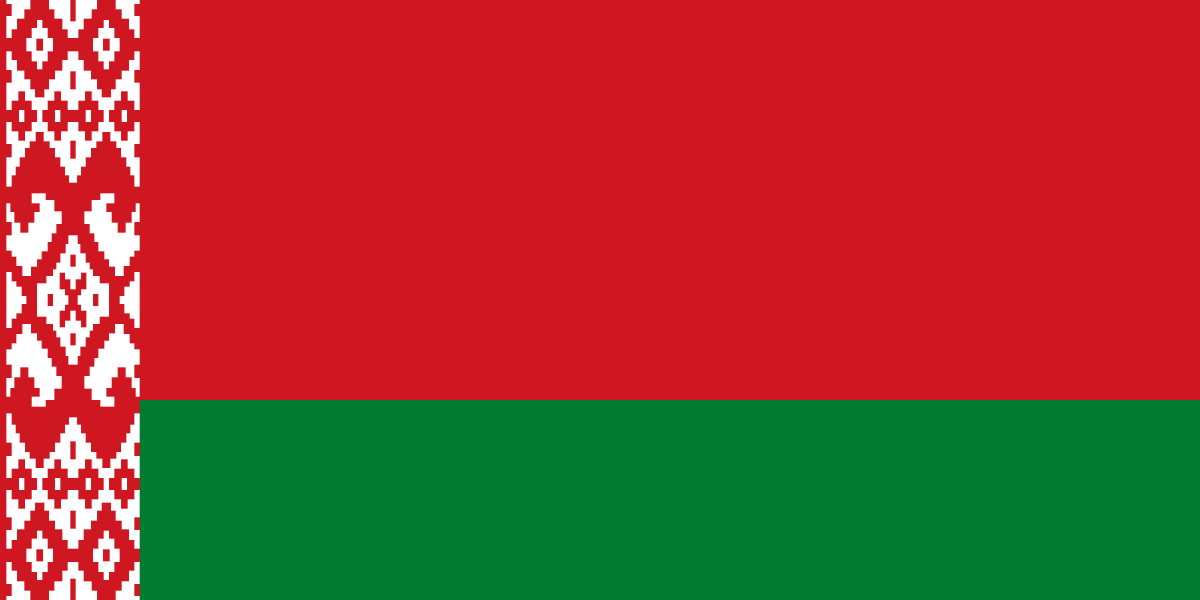 Belarus
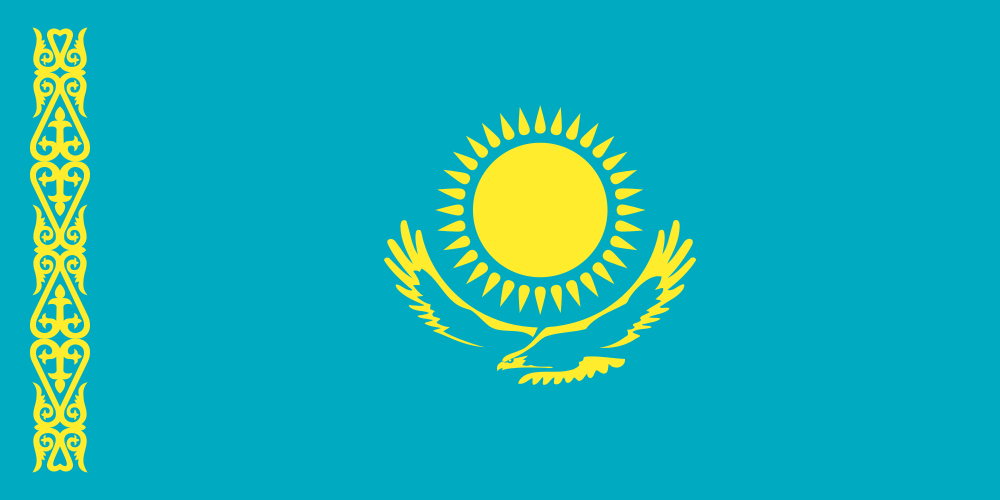 Kazakhstan
 Kyrgyzstan
 Russia
 Tajikistan
Continue exploring
 United Nations
 European Union
 NATO
 Commonwealth of Nations
 African Union
 Arab League
What did you discover?
Take this flag into the quiz
Sources and image credits
This English article draws on the institutional sources listed below. Figures and memberships retain their stated reference dates.
Source record: 2 November 2026. A translation does not change the reference date of a figure or membership list.
- odkb-csto.org/documents/statements/reshenie_soveta_kollektivnoy_bezopasnosti_organizatsii_dogovora_o_kollektivnoy_bezopasnosti_ob_emble/
- odkb-csto.org/25years/
- pacsto.org/about
- en.armradio.am/2026/10/28/armenia-rules-out-return-to-csto-says-foreign-minister/