Eurasian Economic Union: Flag, History and Membership
The flag of the Eurasian Economic Union bears a blue-golden emblem on a white background. Two curved shapes surround a small map of the world. The sign belongs to an organisation of economic integration with five Member States. Its name describes a regional economic area without including all the countries of Europe and Asia. The conspicuous representation of the continent must therefore not be equated with a complete membership card.
Test your knowledge →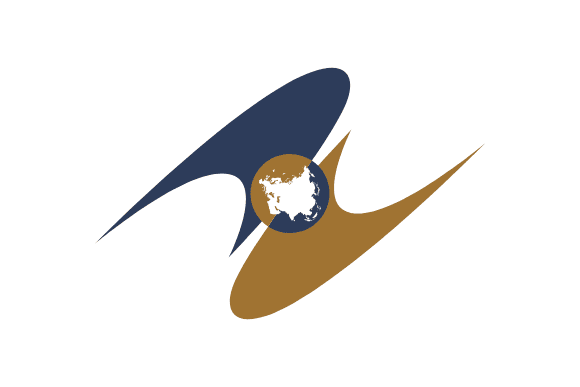
Key facts and distinctions
- Article focus
- International organisation
- Membership record
- 1 November 2026
- Linked country entries
- 5
- List definition
- Country subset of the supplied member record
- German
- Eurasian Economic Union; EAEU
- English
- Eurasian Economic Union, EAEU
- Contract signed
- 29 May 2014, Astana
- Treaty in force
- 1 January 2015
- Members
- Armenia, Belarus, Kazakhstan, Kyrgyzstan, Russia
- Economic Commission
- Permanent Regulatory Body in Moscow
- Court of Justice
- Minsk, Belarus
- Flag proportions
- Height to length 2:3
Blue and gold around a small card
The central emblem combines two dynamically curved shapes. One appears dark blue, the other gold colored; in the narrow center is a small round card picture. The large white area leaves the sign free. In the illustration shown, it thus acts as a moving loop, the parts of which lie opposite one another without individual Member States being designated by stars or lettering.
The symbol rule adopted in 2014 describes a white rectangular cloth with the emblem in its center. The ratio of height to length is 2:3. According to the official declaration, blue stands for Europe and gold for Asia. The white area refers to the peaceful claim of activity; the circle to common interests of both continents. These statements describe the intended institutional message.
A 2014 contract will take effect in 2015
The Eurasian Economic Union Treaty was signed in Astana on 29 May 2014 and entered into force on 1 January 2015. The Union builds on previous cooperation in a customs union and a common economic area. The new contractual basis bundled and deepened this integration. The signing and entry into force are thus in different years, each of which describes its own historical process.
Armenia’s Accession Treaty took effect on 2 January 2015, and Kyrgyzstan has been part of it since 12 August 2015. The Eurasian Economic Commission serves as a permanent regulatory body and is based in Moscow. The Court of Justice of the Union is located in Minsk. A blanket single headquarters would shorten this distribution of important facilities. Political leaders, the Commission and the Court of Justice perform different tasks within the same treaty rules.
Five States and Four Economic Freedoms
The official survey confirms Armenia, Belarus, Kazakhstan, Kyrgyzstan and Russia as five members. The Union provides for the free movement of goods, services, capital and labour. These four areas describe their economic integration goal. What specific rights and rules apply depends on the contract and other agreements; the flag motif itself does not contain any detailed information.
Observer states or trading partners are not automatically full members. Similarly, the Union must not be equated with the Commonwealth of Independent States or a security alliance. Partially, the country lists overlap, but each organization has its own contracts and tasks. For the quiz, only the countries explicitly listed as Member States count. The reviewed status refers to 1 November 2026.
Details Worth Remembering
A card is not a membership list
The emblem captures the size of Eurasian space. The actual membership, however, comprises only five states. This difference is common with organization flags: a map can express the geographical idea of collaboration without claiming membership or affiliation for each landscape depicted.
Differentiating the economy and security
A state can belong to several organizations with very different tasks. The EAEU focuses on common economic rules. The similar geographical distribution of other mergers is therefore not a substitute for examination. Anyone who learns the task and the membership group together is less likely to confuse economic union, political community and military treaty.
Two cities for different facilities
Moscow and Minsk represent different institutional functions. A Commission accompanies economic regulation and a court deals with legal issues within the framework of the Union. The spatial distribution makes it clear that an international organization can consist of several bodies, whose locations do not all have to coincide.
The illustrated signs and variants
Countries in the supplied learning record
These links cover countries represented in this site’s country database. Any territories, regional governments, observer categories or participation qualifications are discussed above. Counts are not interchangeable.
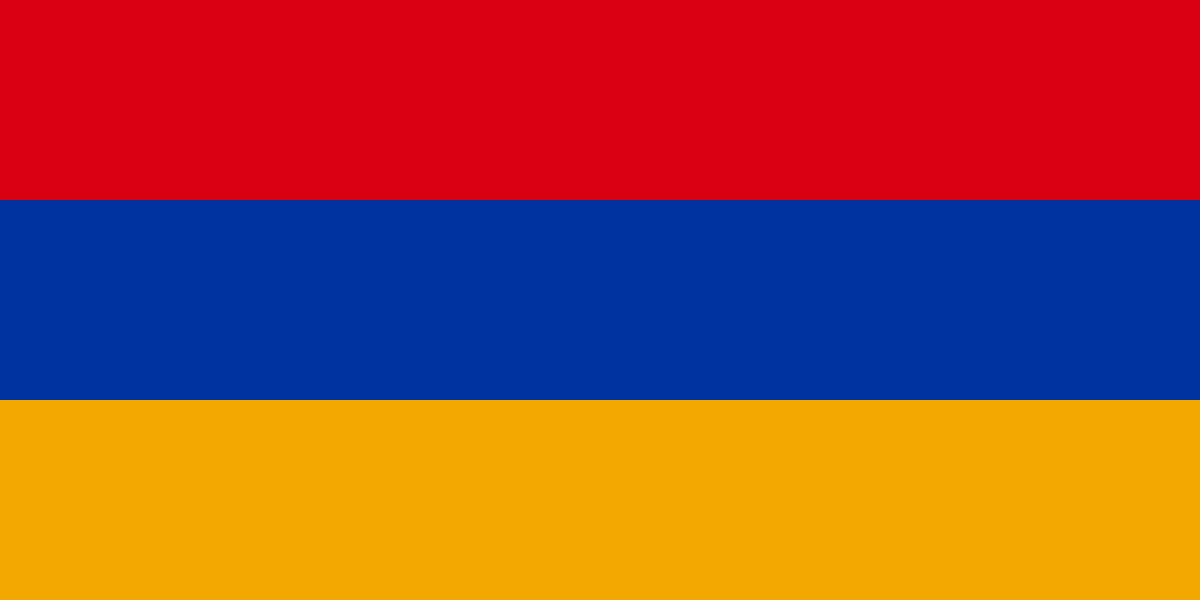 Armenia
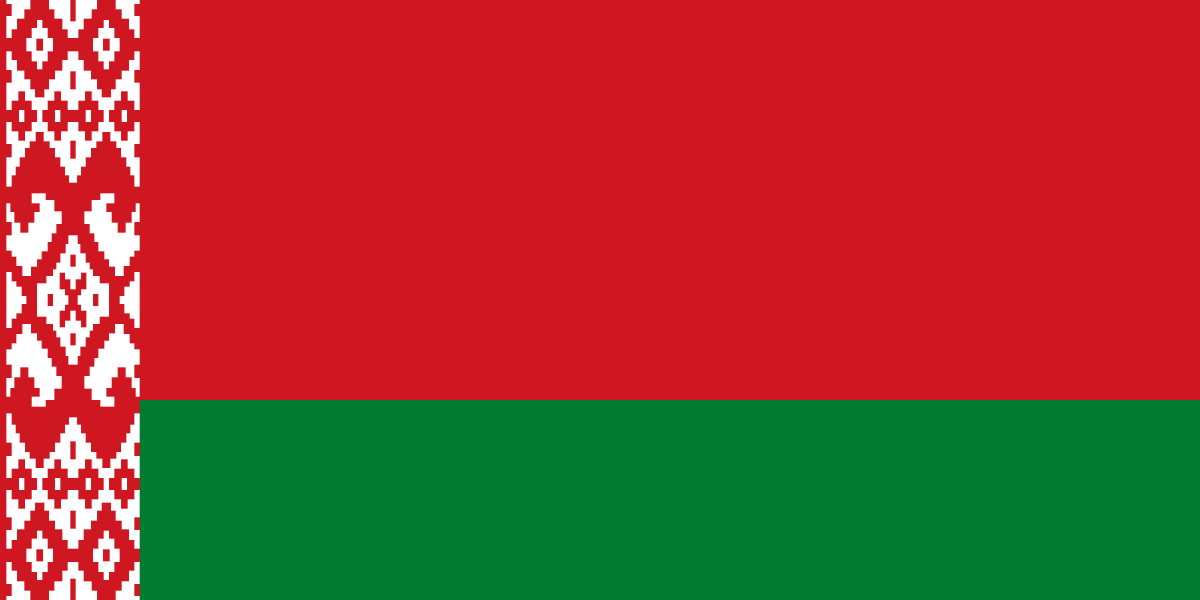 Belarus
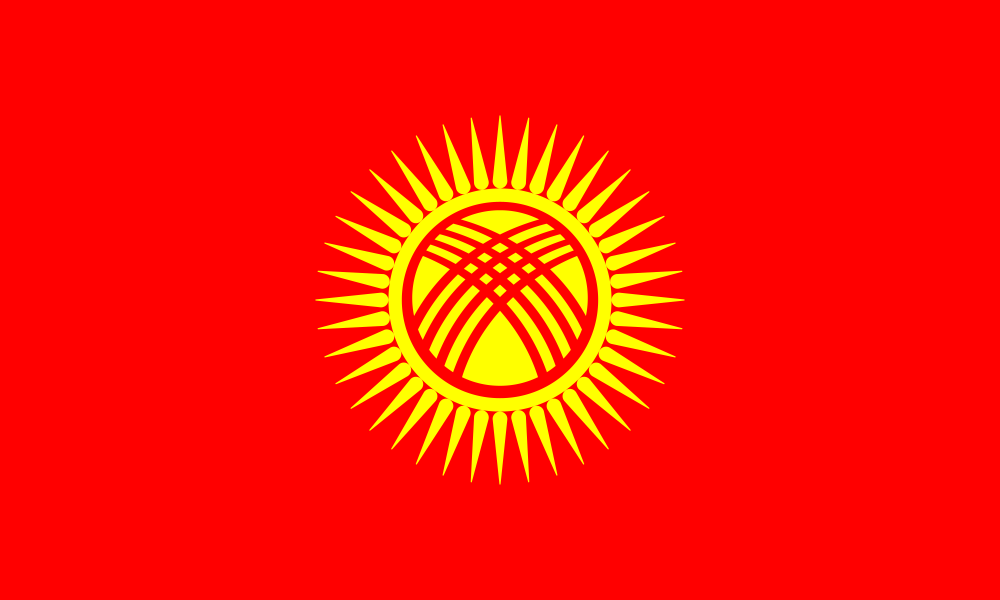 Kyrgyzstan
 Kazakhstan
 Russia
Continue exploring
 United Nations
 European Union
 NATO
 Commonwealth of Nations
 African Union
 Arab League
What did you discover?
Take this flag into the quiz
Sources and image credits
This English article draws on the institutional sources listed below. Figures and memberships retain their stated reference dates.
Source record: 2 November 2026. A translation does not change the reference date of a figure or membership list.
- eaeunion.org/
- mfa.am/en/international-organisations/6
- eec.eaeunion.org/upload/files/paos/library/2659_1_eng_%D0%A6%D0%B8%D1%84%D1%80%D1%8B%20%D0%B8%20%D1%84%D0%B0%D0%BA%D1%82%D1%8B_04%D0%98%D1%82%D0%BE%D0%B3%D0%BE%D0%B2%D1%8B%D0%B9%20%D0%B8%D1%82%D0%BE%D0%B3.11.2017.pdf
- adilet.zan.kz/rus/docs/H14B0000076
- forum.eaeunion.org/news/flag-i-emblema-eaes/