Historic flags of Portugal and Spain
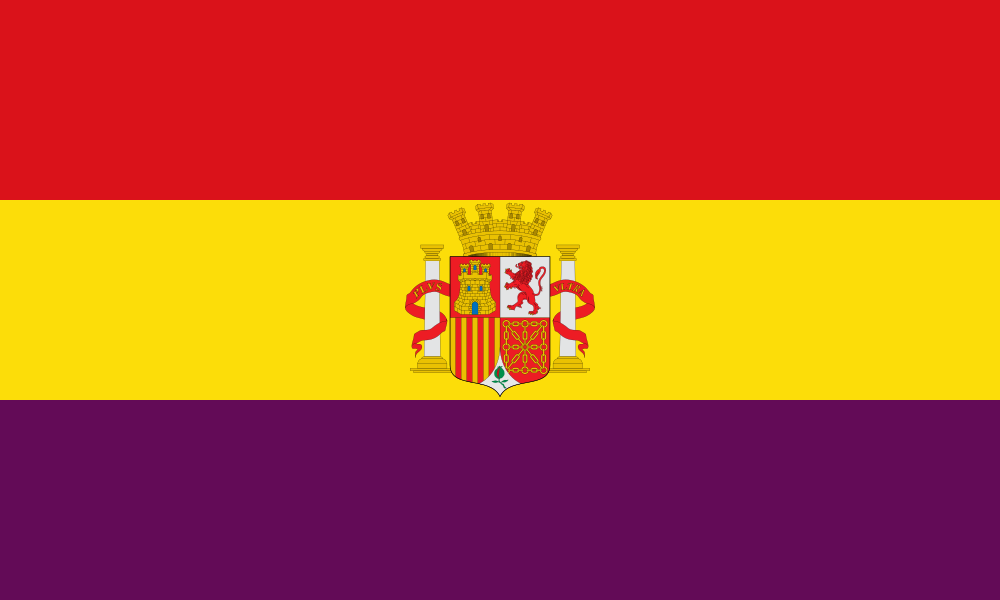
Portugal and Spain also changed their flags with political upheavals. The Portuguese monarchy introduced blue and white with a crowned coat of arms. The Second Spanish Republic used red, yellow and violet. Both historical designs differ significantly from today’s national flags. The comparison shows how colors and crowns of arms can make a change in the form of government visible.
Test your knowledge →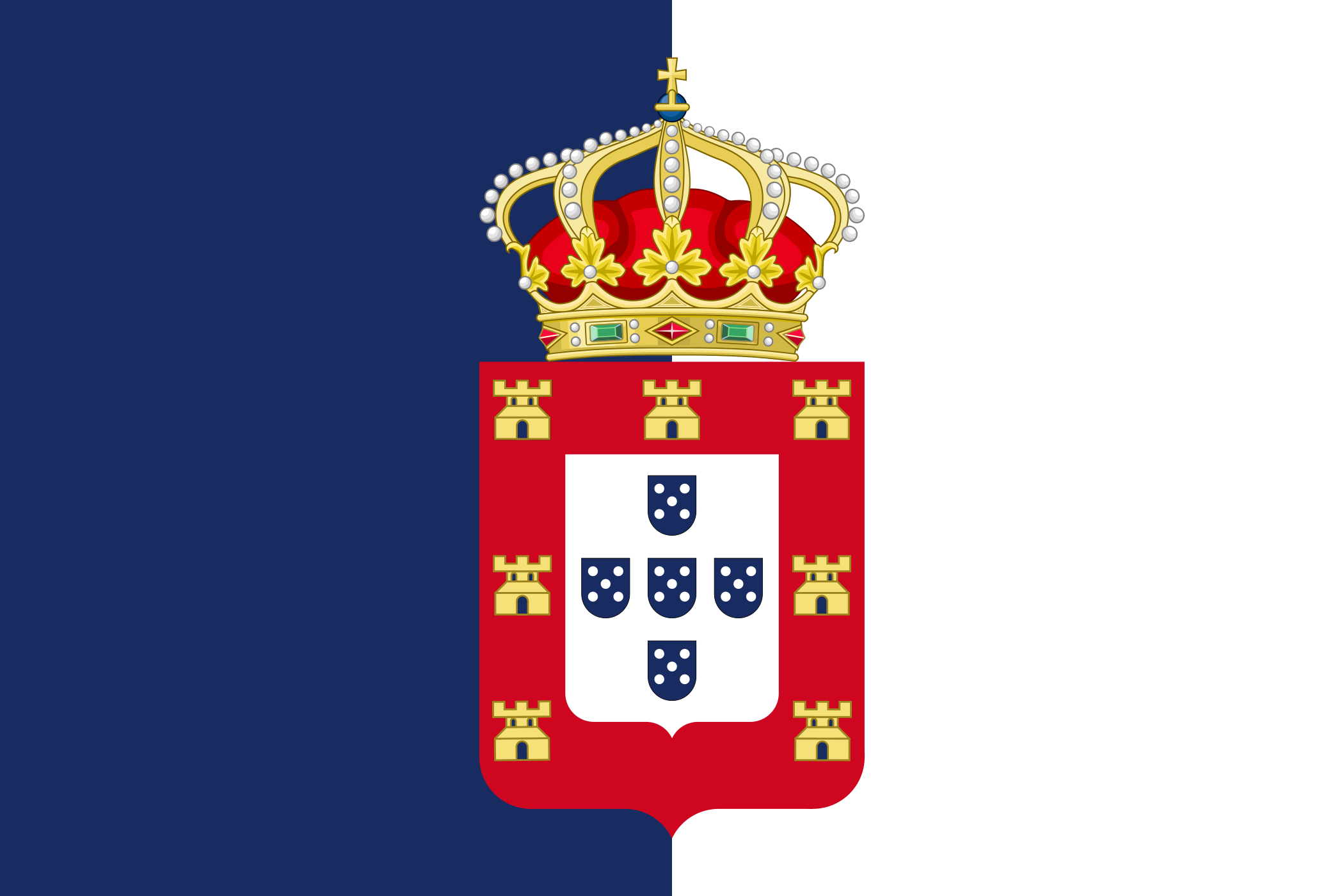
Key facts and distinctions
- Article focus
- Historical flag variants
- Date convention
- Periods describe the illustrated variant
- Scope
- Selected designs; no Nazi flags or symbols
- Portugal: model shown
- 1830–1910
- Portuguese colour arrangement
- Blue and white vertical
- Portuguese additional symbol
- Crowned royal coat of arms
- The Portuguese Republic proclaimed
- 5 October 1910
- Parliamentary Flag Confirmation
- 19 June 1911
- Spain: Republican phase
- 1931–1939
- Spanish color order
- Red–yellow–violet
- Breadth of Republican Railways
- Three equally wide strips
Portugal's blue-and-white monarchy flag
The Portuguese flag in the collection shows a vertically divided blue-white field with the royal coat of arms above it. The crown makes the monarchical connection recognizable. The assignment 1830 to 1910 denotes this late execution of the Kingdom flag; the Kingdom itself existed long before this color division. Such a date should therefore not be read as the founding time of Portugal.
The Municipal Museum of Maia refers to the decree of 18 October 1830 and the use of blue and white by the Liberals. The depiction of the royal house adds that the pattern prevailed nationwide after the victory of the liberal side in 1834. So there can be a political conflict between the decision of a design and its general validity.
1910: A new republic seeks new signs
On October 5, 1910, the Republic was proclaimed in Portugal. The Presidential Museum describes the recasting of the state symbols as one of the early tasks of the new order. Green and red replaced the monarchical color combination. The government decision was made in November 1910; the Constituent Assembly confirmed the flag on June 19, 1911.
The change was by no means just a technical change. Letters received in the archives of the museum show approval for the new color choice, but also the desire to keep blue and white. These documents show that state signs trigger personal ties. Anyone describing an old flag cloth should therefore distinguish between its official role and the different feelings of its viewers.
Spain's Republican Tricolor 1931–1939
The flag of the Second Spanish Republic consists of three equally wide horizontal paths: red above, yellow in the middle and dark violet below. The embodiment shown here bears a republican coat of arms. Article 1 of the 1931 Constitution explicitly mentions the three colors. The violet is the fastest differentiator compared to today’s red-yellow-red flag.
The Spanish Congress describes the new symbols as a visible expression of the regime change of 1931. The republic existed until 1939; during the civil war, however, different dominions stood side by side. The period thus denotes the republican context and no flag sovereignty enforced everywhere at the same time. Unlike in Portugal, the particularly striking change here lies in the third horizontal color track.
Details Worth Remembering
Crown is not the same as coat of arms
In Portugal, the crown carried a clear statement about the form of state at that time. The rest of the coat of arms also contained older national elements. In a political change, therefore, individual parts of a sign can disappear, while others are reused in an altered arrangement.
Confirmation follows decision
Portuguese history combines revolution, decision of the provisional government and later parliamentary confirmation. These steps explain why representations show up in both 1910 and 1911. Different data can name different legal and political events without contradicting each other.
Violet targeted
In Spain, the view of the lower railway is often enough to classify the historical republican variant. For a full description, strip width and coats of arms should then be tested. Thus, a quick recognition becomes an exact distinction between related designs.
The illustrated signs and variants
Continue exploring
What did you discover?
Take this flag into the quiz
Sources and image credits
This English article draws on the institutional sources listed below. Figures and memberships retain their stated reference dates.
Source record: 2 November 2026. A translation does not change the reference date of a figure or membership list.
- visitmaia.pt/eventos/peca-do-mes-de-junho-2024-bandeira-do-municipio-de-1830-a-1910
- casarealportugal.org/english-version/royal-house/flags/
- museu.presidencia.pt/pt/conhecer/arquivo-dos-presidentes-mpr/destaques-arquivo-mpr/destaques-arquivo-mpr-16/
- presidencia.pt/en-en/president-of-the-republic/the-presidency/national-symbols/
- congreso.es/constitucion/ficheros/historicas/cons_1931.pdf
- congreso.es/webpublica/estudios/congreso_internacional_artes_deco.pdf