German flags through time
Three historical flags show that German history cannot be told by changing color rows alone. The trade flag of the Weimar Republic fulfilled a special task at sea. The GDR complemented familiar colors with their coat of arms. On the Saar, a cross flag denoted its own political intermediate state. Decisive in each case are design, period of time and intended use.
Test your knowledge →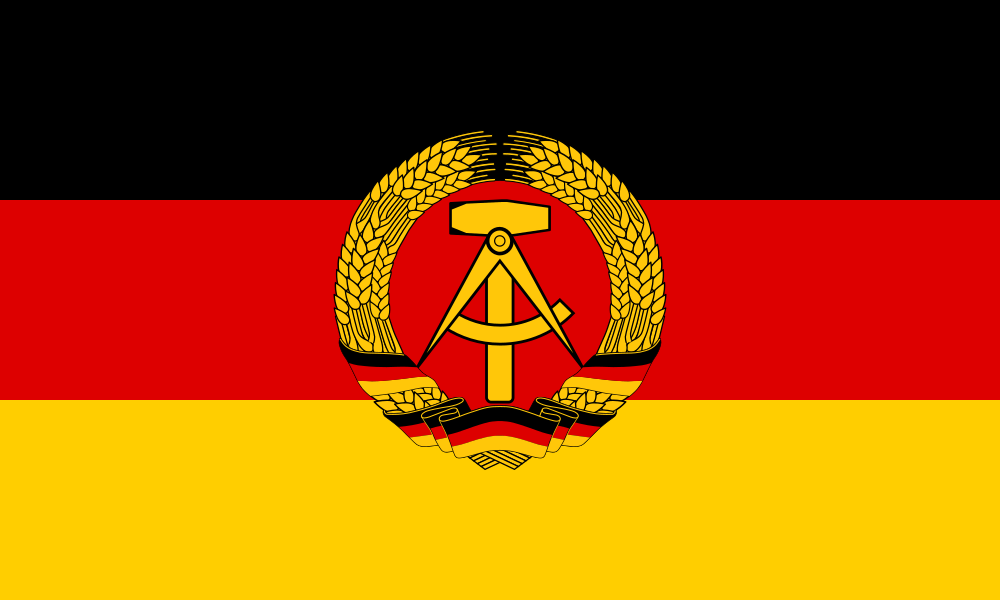
Key facts and distinctions
- Article focus
- Historical flag variants
- Date convention
- Periods describe the illustrated variant
- Scope
- Selected designs; no Nazi flags or symbols
- Weimar motif
- Black-and-white red with black-and-red-golden upper corner
- Trade flag displayed
- 1921–1933
- Weimar function
- Trade flag; to be distinguished from the national flag
- GDR-execution
- 1959–1990
- GDR coat of arms
- Hammer, collar and earring
- Saar execution in stock
- 1947–1956
- Saar statute rejected
- 23 October 1955
- Saarland as federal state
- Since 1 January 1957
A compromise for commercial shipping
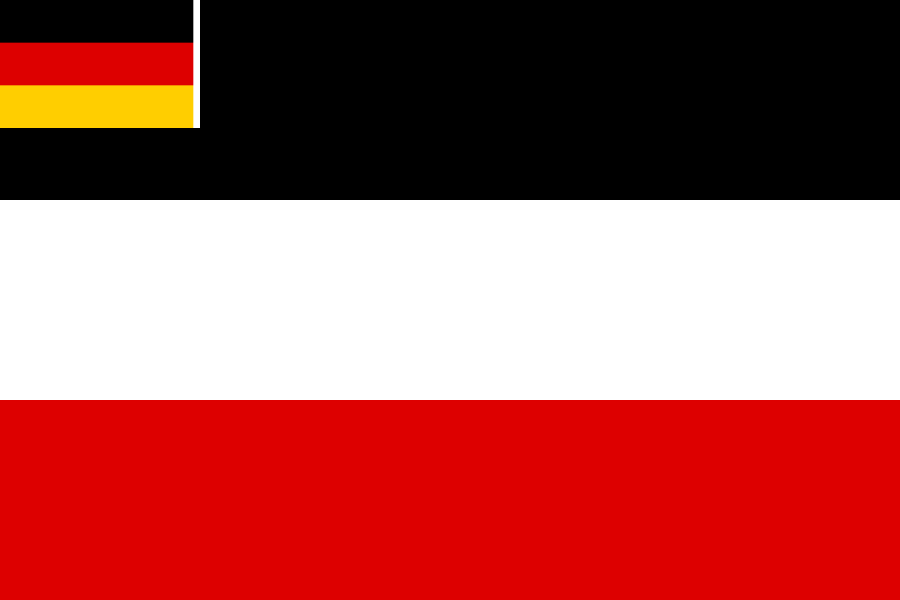
The trade flag shown here from 1921 to 1933 has three horizontal tracks in black, white and red. In the upper corner on the mast, additional black-red-gold appears. This small field is the key to classification: the entire flag is neither an ordinary black-and-white-red tricolor nor the black-and-red-golden national flag of the Republic.
Article 3 of the Weimar Constitution combined the imperial colors black-red-gold with a special rule for the trade flag. The Flag Ordinance of 1921 regulated their implementation; the Federal Archives documents the political dispute over the colors. For historical images, this means that a merchant ship can be flagged differently than a state building, although both belong to the same state.
Black-red gold with a new midpoint
The GDR, founded in 1949, also initially chose black-red gold. It was not until 1959 that the coat of arms came to the center. The illustrated version therefore belongs to the period 1959 to 1990 and does not denote the entire existence of the GDR. Hammer, compass and earring together form the striking mark of recognition on the cloth.
The symbols should represent workers, intelligentsia and peasants. At the same time, the added coat of arms made the claim for a separate state visible. The basic colors remained identical with those of the Federal Republic. It is precisely this juxtaposition of common color tradition and different emblem that explains why a close look at the center of the flag says so much historically.
The Flag of the Cross in the Saar
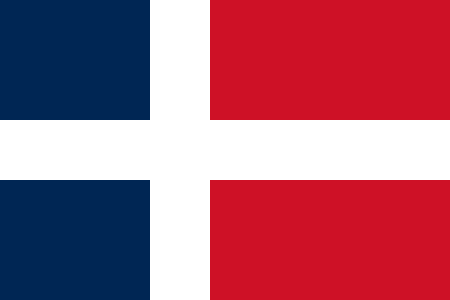
The Saar flag of the 1947 to 1956 phase is composed of blue fields at the mast, red fields at the free end and a white cross. It belongs to the semi-autonomous Saar under French influence. The term Saarprotectorate describes this special status; it must not be equated with today's Saarland as a federal state.
The political future of the Saar was controversial between France and the Federal Republic. On 23 October 1955, the population rejected the European Saar Statute. After further negotiations, the Saarland became a federal state on 1 January 1957. The cross flag is therefore also an indication that political affiliation was negotiated after the war and did not result directly from a geographical location.
Details Worth Remembering
The small corner decides
In the Weimar trade flag, a limited part of the cloth contains the republican imperial colors. Who alone names the large stripes, overlooks the very element that characterizes this historical execution. So the size and meaning of a sign do not have to match.
Coats of arms and colors separately read
In the GDR, the change of 1959 can be read as a second level: The color order remained, the state sign was supplemented. Thus, a change of flag can express a new political demarcation without replacing the entire graphical setup.
Three Different Comparative Values
The selection combines a trade flag, a state flag and a flag of a special political area. It therefore does not form a continuous series of successive German national flags. Their common learning value lies in keeping different functions and time periods apart.
The illustrated signs and variants
Continue exploring
What did you discover?
Take this flag into the quiz
Sources and image credits
This English article draws on the institutional sources listed below. Figures and memberships retain their stated reference dates.
Source record: 2 November 2026. A translation does not change the reference date of a figure or membership list.
- aktenreichskanzlei.bundesarchiv.de/dokument/wir-D62
- bundestag.de/parlament/symbole/flagge
- hdg.de/lemo/kapitel/nachkriegsjahre/doppelte-staatsgruendung/entstehung-der-ddr-gesamtdeutscher-anspruch
- saarland.de/stk/EN/service/downloads/Entstehung_Saarland.pdf
- hdg.de/lemo/kapitel/geteiltes-deutschland-gruenderjahre/weg-nach-westen/saarfrage.html