Juliett, Kilo, Lima and Mike: Signal Flags and Meanings
Juliett, Kilo, Lima and Mike range from a hazard with dangerous cargo to the sober message of a stopped ship. Three of the flags also contain a reference to the communication or behavior of others. The group is particularly instructive because similar-sounding short versions can blur crucial differences between fire, contact desire, prompting and condition.
Test your knowledge →
Key facts and distinctions
- Article focus
- International Code of Signals
- Learning distinction
- Sign, message and context are separate
- Juliet
- J. Fire with dangerous charge or leakage of dangerous charge
- Juliett model
- Blue-white-blue, horizontal
- Kilograms
- K. Desire for connection
- Sample kilo
- Yellow and blue, vertical
- Lima
- L; immediate stopping of the addressed vessel
- Lima model
- Yellow and Black Quarters
- Mike
- M; stopped, no ride through the water
- Mike pattern
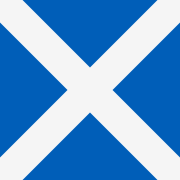
- White diagonal cross on blue
Juliett and Kilo: Differentiating Danger and Contact
Juliett has three horizontal stripes in blue, white and blue. J indicates a fire in the event of a dangerous cargo on board with the indication that it is clearly clear or a leakage of a dangerous cargo. This second possibility is of the utmost importance. The blanket translation Fire would therefore be inaccurate. Similarly, it would be wrong to claim that every occurrence of dangerous goods is already designated by Juliett.
Kilo shows yellow and blue perpendicularly. Its single flag meaning K expresses the desire to connect with the opposite person mentioned. There is no statement about a particular disturbance, charge or assistance. Compared with Juliett, K first concerns the need for communication itself. The spelling name Kilo here denotes the letter K and is not an indication of weight or distance.
Lima and Mike: Invitation to State
Lima is divided into yellow and black quarters. L asks the other ship to stop immediately. The statement is thus addressed to a recipient. This distinguishes them from Mike, whose blue field bears a white diagonal cross. M describes the sending ship: It is stopped and does not travel through the water. Two similar-sounding translations become very different messages when read accurately.
The addition through the water is factually significant for Mike. It refers to the movement relative to water, not explicitly to an unchanged geographical position above ground. For conceptual learning, it is sufficient to distinguish these reference systems. The signal does not contain any specific information about the flow, the armature condition or the cause of the stop. These details should not be read into the short meaning.
Signal image, complete set and other sets of rules
In this group of four, learning with complete sentences is worthwhile. Who connects Juliett only with danger, Kilo only with radio, Lima only with stop and Mike only with peace, can assign the objects approximately, but answers precise questions still not reliably. A meaningful comparison always asks who reports something, whom the message concerns and which closer condition explicitly belongs to it.
Race signals show particularly clearly why the rules must be read. In the Racing Rules of Sailing, for example, Mike has a function as marking a replacement for a missing railway brand. This is a sporting use of the same pattern. It does not replace the meaning in the International Signal Book. Similarly, a historical or local Lima interpretation should not be adopted unchecked as today's general ICS single signal.
Details Worth Remembering
Two cases with Juliett
The full Juliett meaning includes a fire with a dangerous charge and, alternatively, its escape. Who knows only one of the two possibilities, shortens the message. Bravo remains the other signal for loading, unloading or transporting dangerous goods.
Who is going to stop?
Lima makes a request to another ship. Mike, on the other hand, reports the condition of his own ship. The perspective of the sentence is therefore a more reliable learning anchor than stopping the common word.
The same cloth in sports
Mike can mark a replacement for a missing railway mark on regattas. This example illustrates the boundary between the international communication code and sporting race rules: the picture alone does not yet define the set of rules used.
The illustrated signs and variants


Continue exploring
What did you discover?
Take this flag into the quiz
Sources and image credits
This English article draws on the institutional sources listed below. Figures and memberships retain their stated reference dates.
Source record: 2 November 2026. A translation does not change the reference date of a figure or membership list.
- govinfo.gov/content/pkg/GOVPUB-D5_300-PURL-LPS73101/pdf/GOVPUB-D5_300-PURL-LPS73101.pdf
- imo-epublications.org/content/books/9789280117387
- oceanservice.noaa.gov/education/dyw-blue-peter.html
- media.sailing.org/sailing/wp-content/uploads/2025/07/29083752/2025-2028-RRS-with-Changes-and-Corrections.pdf