Vaud: Canton Flag, Capital and Regional Profile
The Vaud is a French-speaking Swiss canton between lakes, Jurahöhen and Alps. Lausanne is their main town, while the wine terraces of the Lavaux form a particularly well-known part of the cultural landscape. With Liberté et Patrie, the white-green flag bears an unusually legible motto and thus links regional recognition directly with political memory.
Test your knowledge →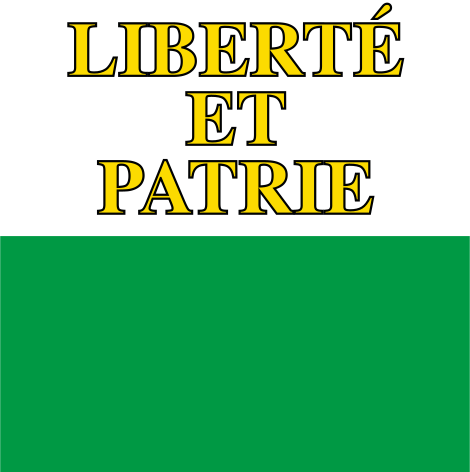
Vaud at a glance
- Name
- Vaud
- Country
- Switzerland
- Profile type
- Swiss canton
- Administrative seat in source record
- Lausanne
- French cantonal name
- Vaud
- Elections
- Liberté et Patrie
- Highest point
- Diablerets, 3,210 meters
- Great lake
- Lake Geneva/Léman
- Other lakes
- Lac de Joux
- Independence of Bern
- 24 January 1798
- First Grand Council
- 14 April 1803
- World Heritage Sites
- Lavaux
- Other natural lakes
- Neuburgersee and Murtensee
The Flag of Vaud
The square flag is divided horizontally into white and green. In the upper white field, the golden, dark-framed words LIBERTÉ ET PATRIE are written in three lines. The lower field remains green. The writing is thus an essential component and should not be missing in a description as a secondary ornament.
The motto means freedom and fatherland in German. The cantonal constitution expressly describes white and green as well as the inscription as components of the coat of arms. For the flag quiz, this font combination is especially helpful because the color pairing also occurs elsewhere. The Vaud can thus be distinguished from the simple Saxon flag.
Vaud: Location and Territorial Role
The canton of Vaud is called Vaud in French. Lausanne is the political capital and is located on Lake Geneva. However, the canton also includes areas on other lakes and high-altitude landscapes. The city, the lakeside and the Alpine region are part of a common cantonal territory, but have different forms of settlement and use.
Important natural lakes include Lake Geneva, Lake Neuchâtel, Lake Murten and Lac de Joux. The highest elevation is at the summit of the Diablerets. This combination conveys the spatial span: between lake banks and high mountains, altitude, climate and traffic conditions change considerably without having to leave the canton.
Landscape, History and Culture
The vineyard terraces of the Lavaux are located on the south-facing slopes above the northern shore of Lake Geneva. Walls and narrow terraces allow a special form of viticulture there. UNESCO pays tribute to the long-term interaction between people and the environment, which has produced a widely visible and economically exploited cultural landscape.
On January 24, 1798, the Vaudland broke away from the Bernese rule. However, a Swiss canton in today's historical sense became the Vaud only in 1803. This distinction is essential: the declaration of independence and the establishment of a federal canton were successive steps, not a single event on the same date.
The first Vaud Grand Council met in the Lausanne City Hall on 14 April 1803. The new political community had to organize administration, school, justice and numerous other tasks. The flag and the seal were part of this state structure. The motto can therefore be placed in a concrete historical context.
Lavaux
The wine terraces extend along the shore of Lake Geneva towards Lausanne. Its today recognizable structure goes back substantially to the Middle Ages, when Benedictine and Cistercian monasteries were active here. Not only a beautiful view of the lake is protected, but a landscape used and maintained for a long time.
Two Historical Remembrance Days
January 24 commemorates 1798, April 14 the first Great Council of 1803. Both data have their own meaning in the Vaud. Those who keep them apart understand more precisely how, from the end of Bernese rule, an independent Swiss canton with its own institutions gradually emerged.
Diablerets and Lakes
The highest point of the canton reaches 3,210 meters at Diablerets. This is in clear contrast to the shore landscapes of large lakes. A cantonal journey or map viewing can therefore connect very different natural areas and shows why Vaud should not be described exclusively as a wine-growing region or as a Lausanne urban region.
Explore this country and nearby profiles
 Switzerland
 Zurich
 Bern
 Geneva
 Ticino
 St Gallen
 Graubünden
What did you discover?
Take this flag into the quiz
Sources and image credits
This English article draws on the institutional sources listed below. Figures and memberships retain their stated reference dates.
Source record: 2 November 2026. A translation does not change the reference date of a figure or membership list.
- vd.ch/etat-droit-finances/statistique/statistiques-par-domaine/02-espace-et-environnement/generalites
- vd.ch/actualites/actualite/news/7696i-24-janvier-independance-du-peuple-vaudois
- vd.ch/actualites/actualite/news/3039-14-avril-une-date-fondatrice-pour-le-canton-de-vaud
- whc.unesco.org/en/list/1243/
- vd.ch/fileadmin/user_upload/themes/etat_droit/10ANS_CONSTITUTION.pdf