Mecklenburg-Western Pomerania: State Flag, Capital and Regional Profile
Mecklenburg-Vorpommern lies in the northeast of Germany between the Baltic Sea, island coasts and extensive lake landscapes. Schwerin is the state capital. The unusual national flag combines blue, white, a narrow yellow stripe, again white and red. Their colours combine the traditions of two parts of the country, whose different stories remain visible today in names, museums, architecture and regional symbols.
Test your knowledge →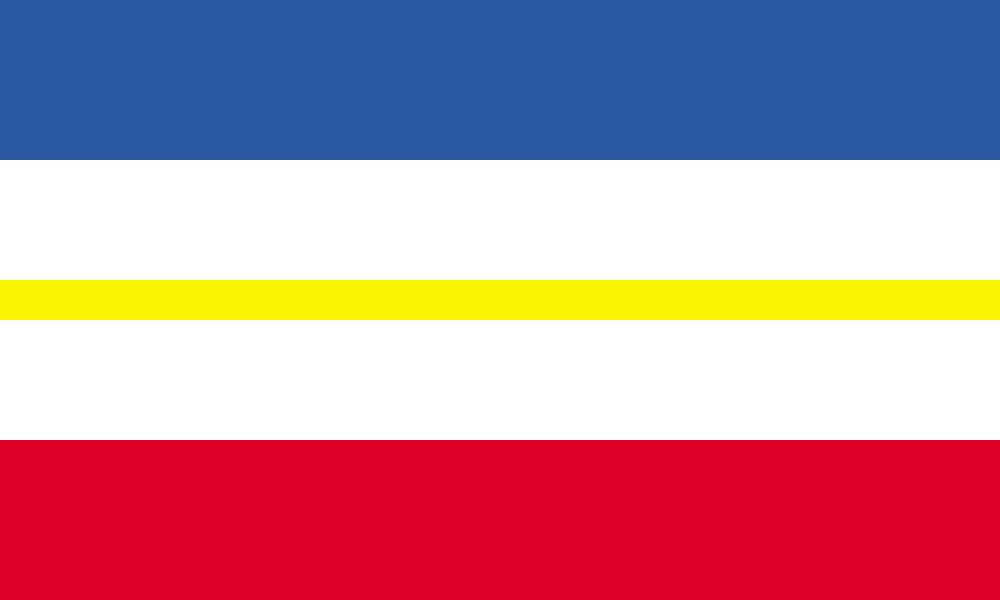
Mecklenburg-Western Pomerania at a glance
- Name
- Mecklenburg-Western Pomerania
- Country
- Germany
- Profile type
- German federal state
- Administrative seat in source record
- Schwerin
- Sea
- Baltic Sea
- Large island
- Replacements
- Another island
- Hiddensee
- Striking cliff coast
- Jasser
- Steep coastal area
- Dornbusch on Hiddensee
- Inland waters
- Müritz
- Further inland waters
- Schwerin Sea
- Schwerin's World Heritage Admission
- 2024
- Regional Museum
- Pomeranian National Museum in Greifswald
The Flag of Mecklenburg-Western Pomerania
The cloth shown has five horizontal ribbons. The yellow middle stripe is particularly narrow and is accompanied by two white areas. Blue forms the upper end, red the lower end. This version contains neither a bull's head nor a handle; such figures belong to the national service flag and are not shown here.
Blue, yellow and red refer to Mecklenburg, blue and white to Pomerania. The combination of colors symbolizes the common federal state. The official declaration also mentions references to older sea flags and Hanseatic colors. The pattern is therefore a conscious merging of regional traditions and not a mere representation of water, beach and sunset.
Mecklenburg-Western Pomerania: Location and Territorial Role
The federal state is located on the southern Baltic Sea and extends inland into water-rich landscapes. Schwerin is the seat of the government and the state parliament; the greatest awareness of a coastal town does not automatically mean that it is the center of national politics. The state capital has its own distinctive spatial shape with its lake and castle.
Islands such as Rügen and Hiddensee expand the coastal landscape by very different forms. Even the outer coast is not a uniform sandy beach. Steep coasts, bays and flat sections alternate. Inland, Müritz, Schweriner See and other lakes form a different water area, which can be distinguished from the salt-rich Baltic Sea region.
Landscape, History and Culture
The formation of the coast is related to glacial landscapes and their subsequent flooding. In many places, removal and rearrangement continue to work to this day. The coastline is therefore a dynamic border. Jasmund’s chalk coast and the Dornbusch on Hiddensee provide particularly vivid examples of high, striking coastal sections.
Schwerin’s residence ensemble has been a UNESCO World Heritage site since 2024. The castle is connected with other administrative, cultural and religious buildings as well as landscaped gardens. The ensemble shows how a capital of residence was planned in the nineteenth century as a coherent functional space. The recognition therefore concerns more than the picturesque view of a single castle building.
In Greifswald, the Pomeranian State Museum is dedicated to the history and culture of a part of the country. His themes include earth history, historical developments and painting, especially Caspar David Friedrich and Philipp Otto Runge. It complements the common flag with a more precise regional perspective and shows why Mecklenburg and Vorpommern should not be treated as interchangeable names.
Chalk Coast of Jasmund
Jasmund’s chalk coast on Rügen is a geologically striking part of the Baltic Sea landscape. The bright cliffs look like solid monuments, but remain exposed to natural coastal dynamics. It is precisely this combination of conspicuous form and continuous change that makes the place suitable for explaining the origin and development of the coast.
Residenzensemble Schwerin
The Schweriner Residenzensemble connects the castle, the city and the lake landscape. The individual buildings took on different tasks of a historical residence and yet worked together. This gives today’s visit an urban dimension: not only facades, but also paths, gaze relationships and the distribution of public functions tell of the past of the place.
Bangladesh
The Dornbusch on Hiddensee belongs to the pronounced steep coast sections of the country. His example complements the more famous chalk paintings of Rügen with a further island perspective. If you connect the Baltic Sea only with flat beaches, you can see how clearly coastal forms can differ from each other in a small area.
Explore this country and nearby profiles
 Germany
 Munich
 Cologne
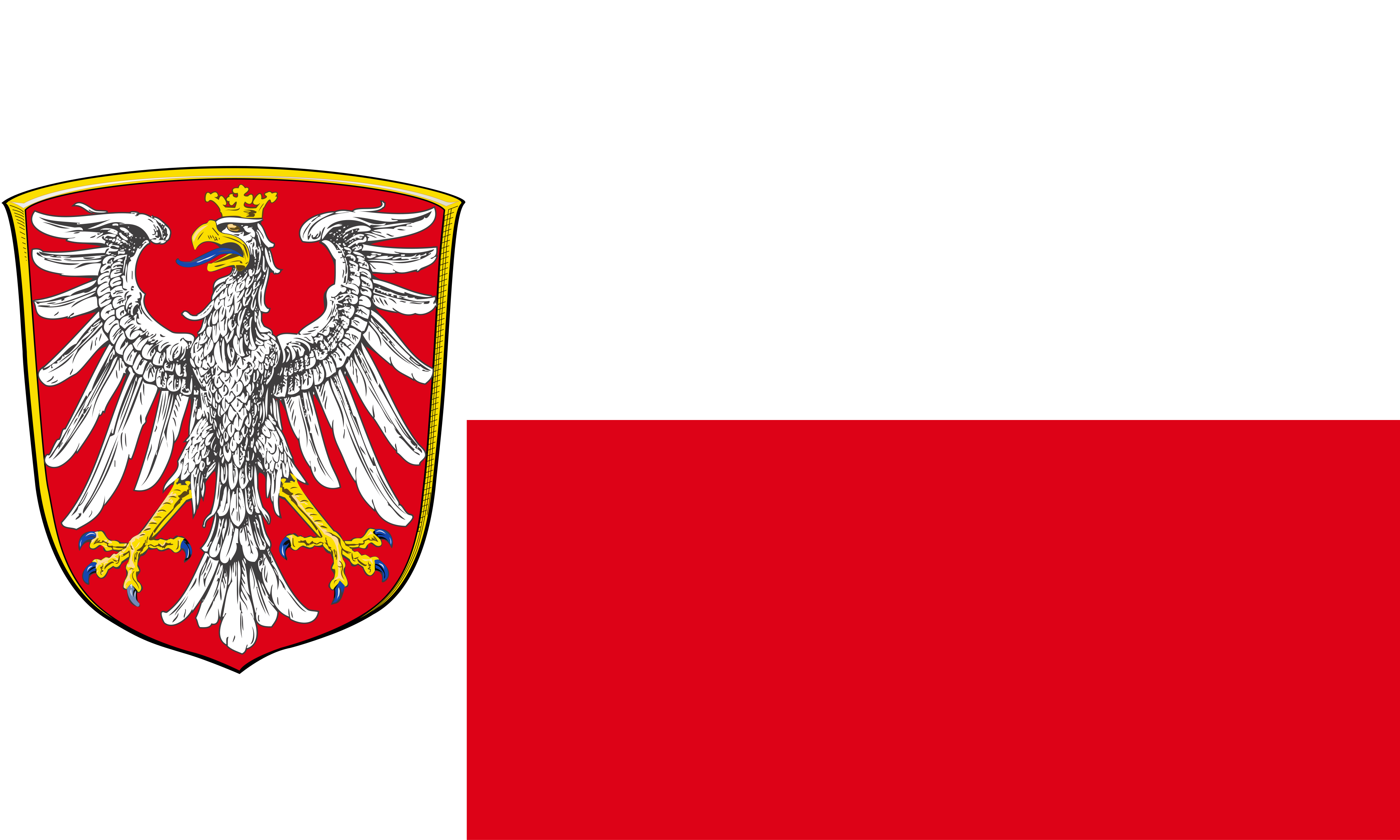 Frankfurt am Main
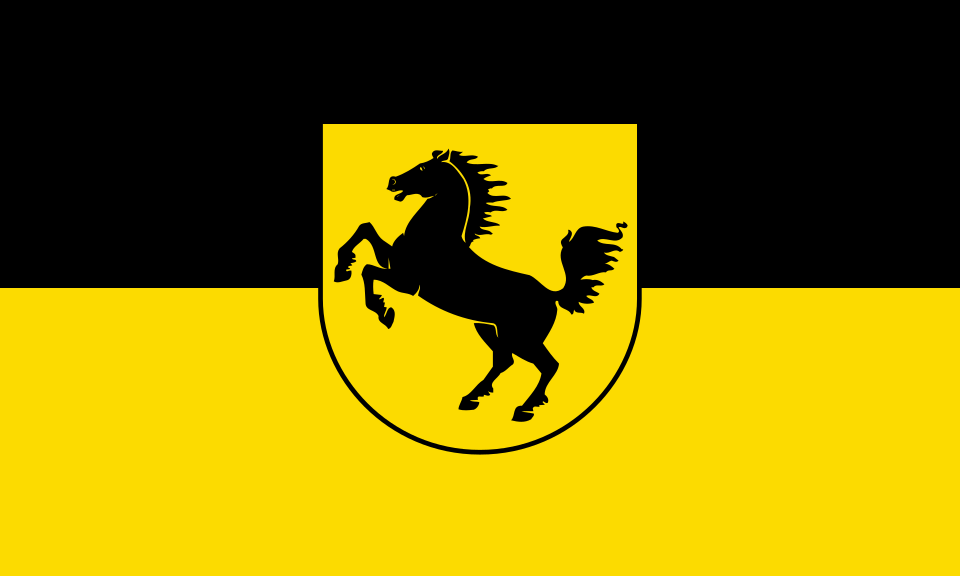 Stuttgart
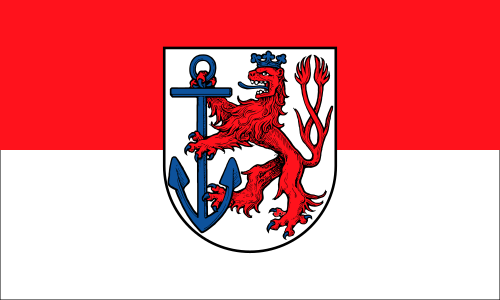 Düsseldorf
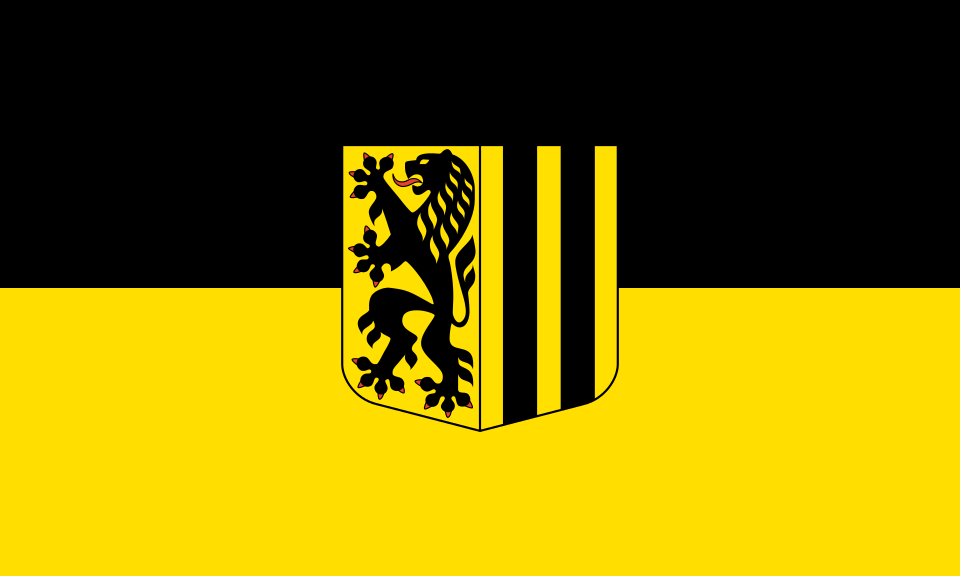 Dresden
What did you discover?
Take this flag into the quiz
Sources and image credits
This English article draws on the institutional sources listed below. Figures and memberships retain their stated reference dates.
Source record: 2 November 2026. A translation does not change the reference date of a figure or membership list.
- regierung-mv.de/service/Landessymbole/Flagge/
- stalu-mv.de/mm/Themen/K%C3%BCstenschutz/Steilk%C3%BCsten-in-Mecklenburg%E2%80%93Vorpommern/
- whc.unesco.org/en/list/1705
- regierung-mv.de/Landesregierung/wkm/Kultur/Sparten/Museen/
- laiv-mv.de/static/LAIV/Statistisches%20Amt/Dateien/Publikationen/Z%20Faltbl%C3%A4tter/Z%20711/Z711%202014%2000.pdf
- politik-mv.de/2018/07/31/die-landessymbole/
- pommersches-landesmuseum.de/ausstellungen/galerie-der-romantik
- lung.mv-regierung.de/fachinformationen/geologie/geogefahren/