Dresden: City Flag, History and Identity
Dresden is located in the Elbtal and is the state capital of Saxony. The black-golden city flag also shows the coat of arms with lion and black piles. Residenzschloss, Zwinger and the districts on both Elbufer make visible different phases of a development in which trade, courtly representation and urban planning were closely linked.
Test your knowledge →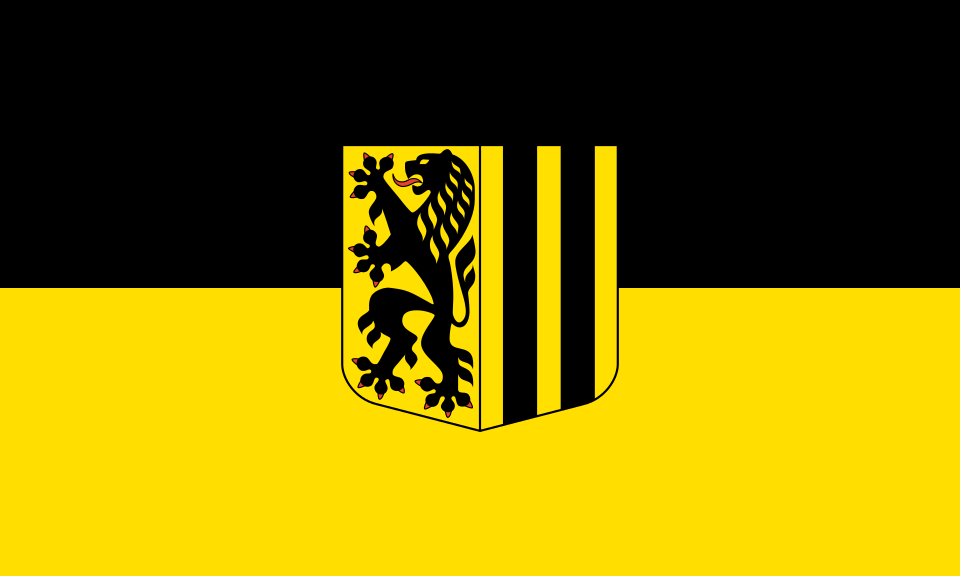
Dresden at a glance
- Name
- Dresden
- Country
- Germany
- Profile type
- City
- River
- Elbe
- Federal Republic of Germany
- Saxony
- First documentary mention
- 1206
- First designation as a city
- 1216
- Residence election by Duke Albrecht
- 1485
- Incorporation of Altendresdens
- 1549
- Brand Altendresdens
- 1685
- Medieval centre
- Altmarkt
- Baroque plant
- Zwinger with crown gate and Nymphenbad
The Flag of Dresden
The bound flag is divided horizontally: black above, golden yellow below. In the middle there is also a golden, split shield. On its left half of the picture stands a black lion; on the right appear two black vertical piles. The variant shown thus contains more than just the two city colors and should be described accordingly.
The official Dresden description names the Meißner Löwen and Landsberger stakes. Here, heraldic directional indications refer to the wearer of the sign: The heraldic right field appears for viewers on the left. This convention explains seemingly contradictory descriptions. For recognition, Leo and the two vertical black bars are the most important individual motifs.
Dresden: Location and Territorial Role
Dresden is located in Saxony on the Elbe. The river location connected shipping with land routes, including connections to Meissen and Bohemia. The city developed at a regional transport hub. The present urban area comprises both banks; a historical consideration must, however, distinguish between the old Dresden and the formerly separate Altendresden.
The first documentary mention dates from 1206, the first designation as a city from 1216. These two data answer different questions. Initial appointment is not automatically the founding of the city and certainly not the beginning of settlement. The urban chronicle continues the later development from a merchant settlement and a dominion to the Saxon state capital.
Landscape, History and Culture
The medieval center was oriented on the Altmarkt. Fortification walls and a moat connected to the Elbe surrounded the city. With the residence function, structural requirements and spatial structures changed. From the castle near the Elbbrücke gradually developed the Residenzschloss. The connection between the bridge, the dominion and the city centre remained particularly important.
After the division of the Wettine possessions in 1485, Duke Albrecht chose Dresden as his residence. The following construction phases shape the historical narrative to this day. The residence city was not only the residence of a ruler, but also the scene of administration, craftsmanship and representation. Large installations required appropriate transport routes, workshops and urban services.
Altendresden on the right side of the Elbe was incorporated in 1549. After the great fire of 1685, a planned new city was built there. This explains an apparent name puzzle: The older Altendresden belongs to the later Neustadt. Historical designations can thus transmit a change, instead of immediately specifying the actual age of the building.
Dresdner Zwinger
The Zwinger is one of the important Baroque construction facilities in Saxony. Kronentor and Nymphenbad make its architecture particularly vivid. Today’s use connects the historical building with museums of the Dresden State Art Collections. The history of architecture and the history of the collection come together in one place, without the original courtly purpose being equated with today’s museum operation.
Altmarkt
The Altmarkt helps to understand Dresden in front of the Baroque residence. The medieval fortifications and the former town hall location show that the city had a longer development of its own. Instead of a single large construction period, several layers emerge. Especially the comparison of Altmarkt, Schlossumfeld and Zwinger makes this temporal staggering easy to understand.
Neustadt after the city fire
With its name, the Neustadt commemorates the reconstruction of Altendresden after the fire of 1685. On the right side of the Elbe, the area was reorganized according to Baroque planning principles. The preserved structures of this complex complement the well-known left-elbian residence scenery. Both banks thus have their own historical layers, which only together produce a more complete picture of the Dresden center.
Explore this country and nearby profiles
 Germany
 Munich
 Cologne
 Frankfurt am Main
 Stuttgart
 Düsseldorf
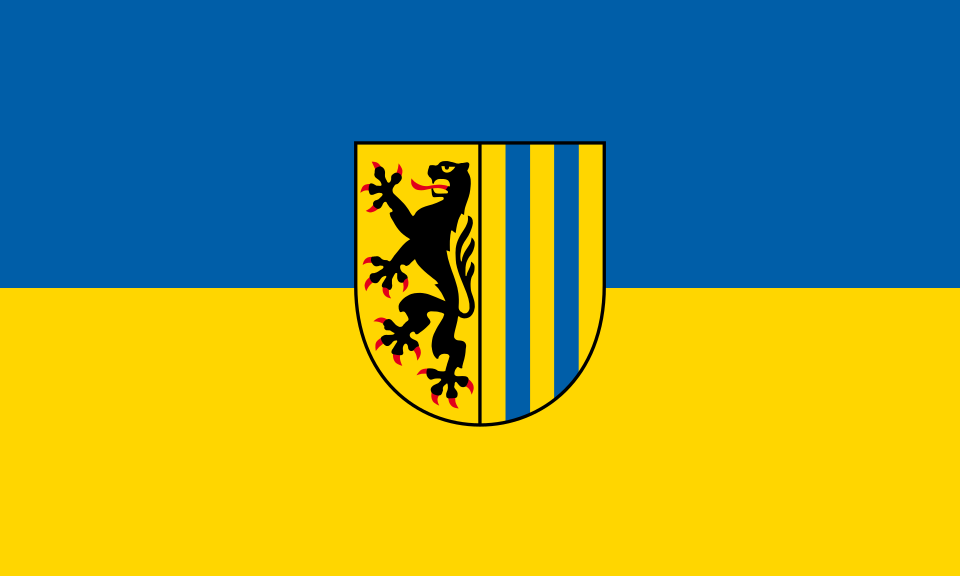 Leipzig
What did you discover?
Take this flag into the quiz
Sources and image credits
This English article draws on the institutional sources listed below. Figures and memberships retain their stated reference dates.
Source record: 2 November 2026. A translation does not change the reference date of a figure or membership list.
- dresden.de/media/pdf/statistik/pdfBrFaktumdt18_Net.pdf
- dresden.de/media/pdf/stadtplanung/stadtplanung/spa_leitb_DD_Leitbild_Endfassung_Internet.pdf
- schloesserland-sachsen.de/der-dresdner-zwinger
- dresden.de/media/pdf/amtsblatt/archiv/2009/ddamt-2009-kw46.pdf
- commons.wikimedia.org/wiki/File%3AFlag_of_Dresden.svg