Historic flags of Afghanistan and Myanmar
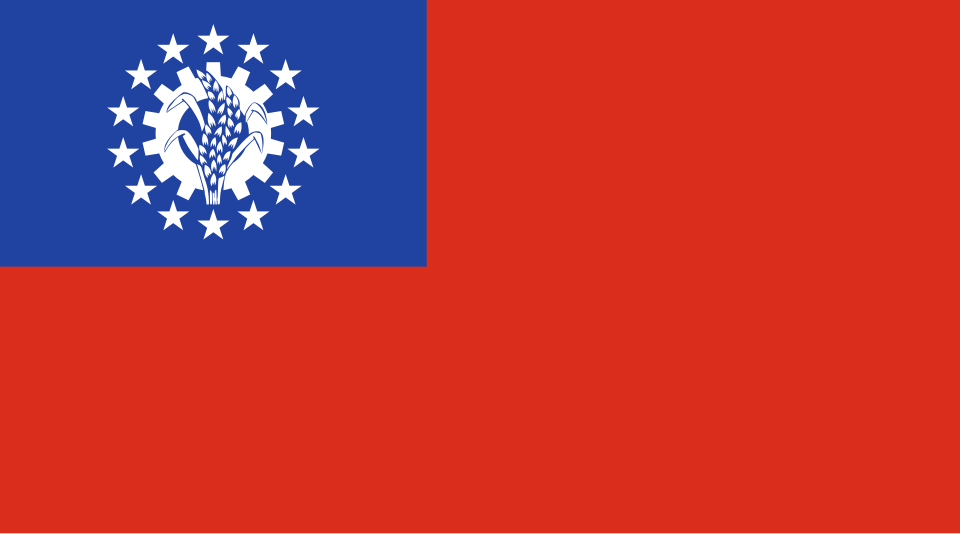
Afghanistan’s red flag from 1978 to 1980 and Burma’s previous flag from 1974 to 2010, respectively, use socialist imagery in different ways. One shows a golden emblem on red cloth, the other a blue upper corner with gear, rice ears and stars. Their respective successions mark different political developments and by no means a common historical timetable.
Test your knowledge →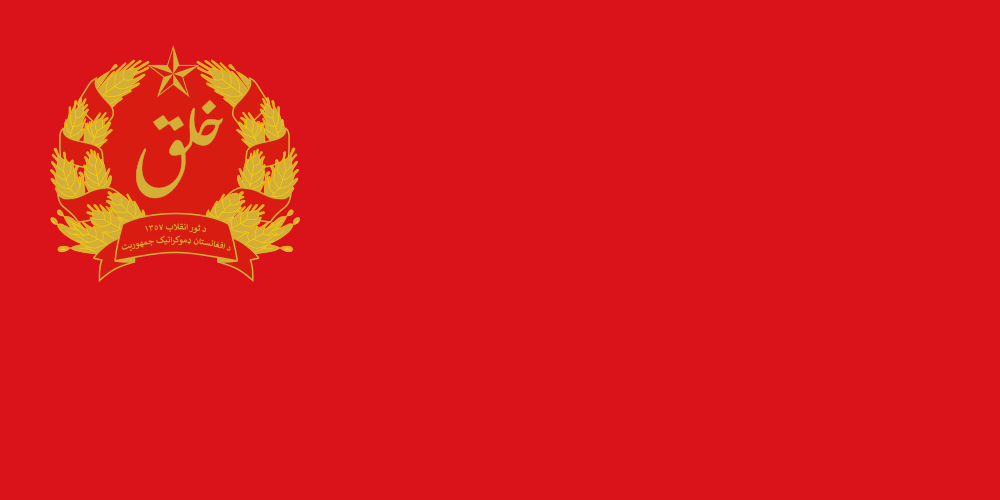
Key facts and distinctions
- Article focus
- Historical flag variants
- Date convention
- Periods describe the illustrated variant
- Scope
- Selected designs; no Nazi flags or symbols
- Afghan image variant
- Red emblem flag 1978–1980
- Introduction of the red version
- October 1978
- Afghan middle word
- Khalq
- Afghan successor in 1980
- Horizontal black-red-green tricolours
- Birmese image variant
- 1974–2010
- Burmese upper corners
- Blue with working emblem
- Number of small stars
- 14
- Successor in Myanmar 2010
- Yellow-green-red with large white star
The Short Red Phase of Afghanistan
The Afghan version consists of a red field with a golden emblem near the mast. To this emblem belong ears, a star and writing. At the center is the word Khalq, which can be translated with people or masses. The design differs significantly from the black-red-green tricolors used in other sections of Afghan history.
The red flag belongs to the rule after the communist overthrow of April 1978. The concrete red emblem version was only introduced in October 1978; the year 1978 must therefore not be read as the beginning of the pattern on the first day of January. The government at that time implemented drastic reforms and met growing resistance. Contemporary diplomatic reports document their dependence on Soviet support.
Working symbols in the blue upper corner
Burma's former flag shows a red cloth with a blue upper corner. In it stand a gear and rice ears, surrounded by fourteen stars. The combination combines industrial work and agriculture in a common emblem. This distinguishes them from a simple constellation and makes the socialist version recognizable even without writing.
The model belongs to the constitutional order of 1974. Article 190 of the then Constitution established the state flag by a figure. The common name socialist flag describes its origin, not the entire duration of an unchanged political system. The design remained in use after the political upheavals of 1988 and the subsequent renaming in Myanmar and was only replaced in 2010.
Two detachments with different forms
In Afghanistan, the new leadership reintroduced a horizontal black-red-green tricolor with state signs in 1980. Article 64 of the then Basic Principles describes these three colors. The change followed the Soviet military intervention in late 1979 and the exchange of leadership. The red flag alone does not explain these events, but is a clear temporal mark of the short preceding phase.
Myanmar’s 2010 successor, on the other hand, uses horizontal trajectories in yellow, green and red as well as a large white star. This eliminated the blue upper corner and the previous working emblem. Today's state description explains the new structure in detail. Such an exchange of symbols in itself proves neither a new democratic beginning nor the end of authoritarian rule; for this, political history must be examined independently.
Details Worth Remembering
A name survives its time of origin
Socialist flag is a viable historical designation for Burma's pattern. However, it must not tempt us to present every year up to 2010 as the same phase of constitution and government. A state sign can survive political upheavals and a changed country name.
Ears as a common motive
Both flags contain agricultural logos, but their arrangement is different. Afghanistan combines ears with gold lettering on red; Burma places rice ears and gear in a blue corner. Therefore, common motifs do not yet make the flags variants of the same design.
Years need an explanation
1978–1980 and 1974–2010 are details of visible flag patterns here. They denote neither the whole stock of countries nor their complete socialist or authoritarian history. Especially for short-lived drafts, a year should always be read together with the concrete context of introduction and replacement.
The illustrated signs and variants
Continue exploring
What did you discover?
Take this flag into the quiz
Sources and image credits
This English article draws on the institutional sources listed below. Figures and memberships retain their stated reference dates.
Source record: 2 November 2026. A translation does not change the reference date of a figure or membership list.
- tile.loc.gov/storage-services/service/ll/llglrdppub/2019668705/2019668705.pdf
- myanmar.gov.mm/en/web/guest/national-symbols
- marxists.org/history/afghanistan/archive/fundamental-principles-of-the-democratic-republic-of-afghanistan-1980.pdf
- history.state.gov/historicaldocuments/frus1977-80v12/d39
- iranicaonline.org/articles/flags-ii/