Flag changes in Georgia and Belarus
Georgia’s wine-red flag and the white-red-white flag of Belarus are among the striking symbol changes at the end of the Soviet era. Both followed on from older national signs. However, their later paths differ: Georgia replaced its 2004 draft with the five-cross flag. In Belarus, White-Red-White lost official status in 1995 and remained an important social and political symbol.
Test your knowledge →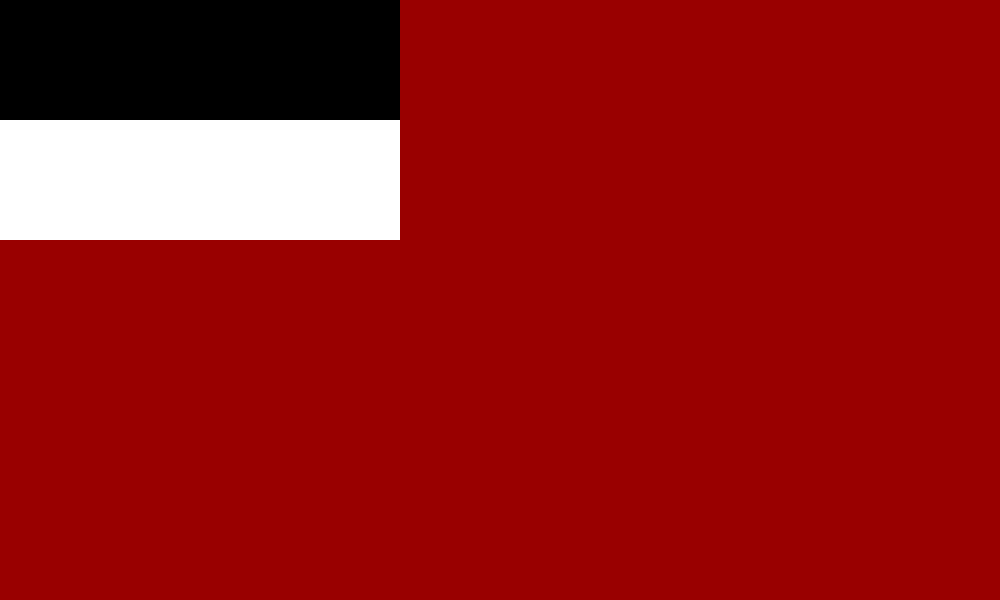
Key facts and distinctions
- Article focus
- Historical flag variants
- Date convention
- Periods describe the illustrated variant
- Scope
- Selected designs; no Nazi flags or symbols
- Georgia: historical catalogue phase
- 1990–2004
- Georgian reason
- Wine red
- Georgian upper corners
- Black over white
- Older Georgian reference
- Democratic Republic of 1918–1921
- Georgian new flag law
- 14 January 2004
- Belarus: official white-red-white phase
- 1991–1995
- Belarus: Referendum
- 14 May 1995
- Belarus: Decree on the new flag
- 7 June 1995
Wine red with black and white upper corner
The historic Georgian flag shows a large area of wine red. Only the upper corner on the mast is divided into a black and a white stripe. The existing draft is assigned to the period 1990 to 2004. He continued with the Democratic Republic from 1918 to 1921 and thus combined the renewed state independence with an older republican tradition.
The Georgian National Library documents this resumption after the multiparty elections of 1990. The flag law, which was later enacted, explicitly refers to the previous laws of 14 November and 28 December 1990, which were repealed with the new regulation. These legal references are particularly helpful because they prove the beginning of the recent use independently of a mere picture legend.
Georgia's legal change of 2004
The law of January 14, 2004 described a white flag with a large red cross and four smaller crosses. This ended the official role of the wine-red design. The contrast is clear in direct comparison: a dark base area with small upper corners was replaced by a light area with signs distributed over the entire cloth.
For historical representations, this change should be named exactly. The wine-red flag is neither a mere color variant of the five-cross flag nor a design of another country. It belongs to the history of the same state. A reuse of older symbols and a subsequent decision for a different draft may be part of the same national history of symbols.
White-red-white between state flag and protest sign
The historical flag of Belarus consists of three equally high horizontal tracks: white, red and white. It was the official state flag from 1991 to 1995. After the referendum of 14 May 1995, new state symbols were introduced. The decree of 7 June 1995 established the red-green flag with ornament on the mast.
The white-red-white flag did not disappear from public memory. The European Parliament expressly praises them as a historic symbol and a sign of democratic aspirations. In today's reports of demonstrations, it can therefore represent Belarus without being its current official national flag. This separation between state status and social significance is particularly important for a factual description.
Details Worth Remembering
An earlier symbol returns
In the case of Georgia, in 1990, the focus was on reconnecting with the former republic. For learning, a double perspective is therefore worthwhile: A design can be older than the concrete use phase, which highlights a historical collection with its years.
Differentiate officially and socially
A flag law specifies which sign authorities use for the state. People can at the same time show another historical cloth as an expression of belonging, memory or opposition. Both levels should be named in an image description without confusing them with each other.
Similar colours, different construction
Georgia’s small black-and-white corner and the continuous white-and-red tracks of Belarus seem completely different. In the case of rapid recognition, therefore, first of all the surface distribution helps. Only in the second step will the country, period and the question of which political role the respective sign in the picture plays follow.
The illustrated signs and variants

Continue exploring
What did you discover?
Take this flag into the quiz
Sources and image credits
This English article draws on the institutional sources listed below. Figures and memberships retain their stated reference dates.
Source record: 2 November 2026. A translation does not change the reference date of a figure or membership list.
- nplg.gov.ge/wikidict/index.php/საქართველოს_დემოკრატიული_რესპუბლიკის_დროშა
- matsne.gov.ge/ka/document/view/13270
- vexillographia.ru/belarus/texts/1995_gos.htm
- iacis.ru/News/Parliaments/The_Republic_of_Belarus_Celebrates_Day_of_State_Emblem_and_State_Flag
- europarl.europa.eu/cmsdata/246305/Joint%20statement%20on%20Belarus%27%20Freedom%20Day.pdf