Brazil: from empire to republic
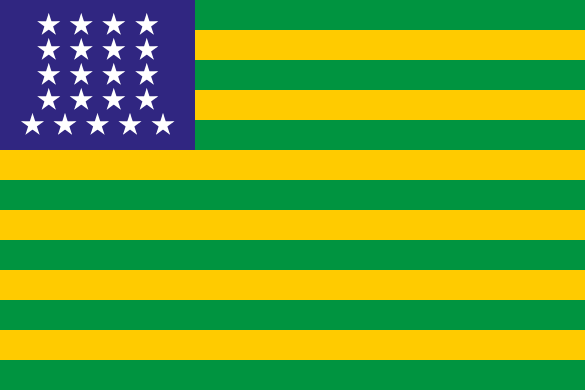
Two historic Brazilian flags show how quickly a change of government can change visible signs. The imperial variant from 1853 to 1889 wears a crowned coat of arms on yellow rhombus. The provisional Republican flag from 15 to 19 November 1889, on the other hand, uses stripes and stars. Both belong to the prehistory of today's green-yellow national flag.
Test your knowledge →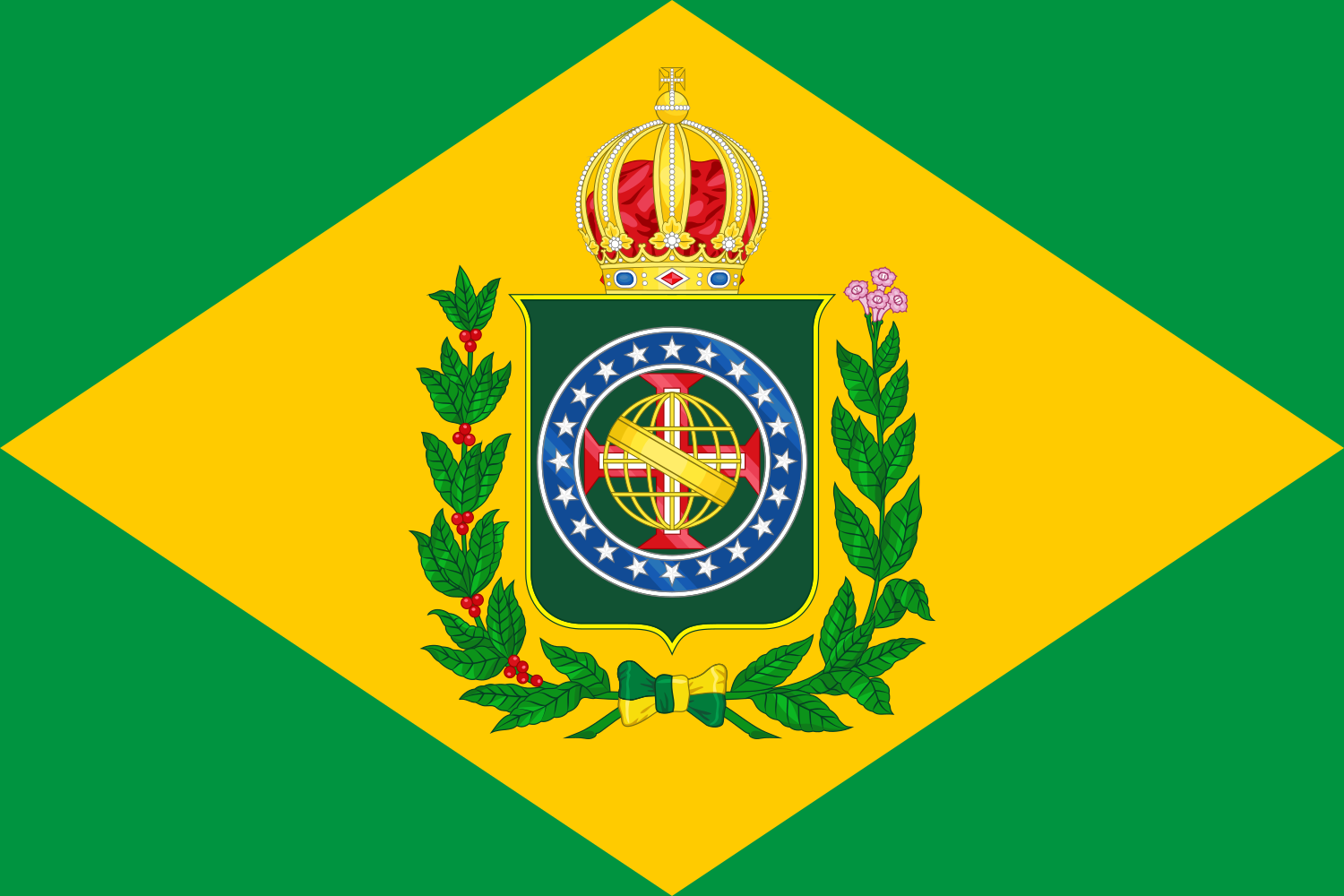
Key facts and distinctions
- Article focus
- Historical flag variants
- Date convention
- Periods describe the illustrated variant
- Scope
- Selected designs; no Nazi flags or symbols
- Imperial image variant
- 1853–1889
- Total Empire
- 1822–1889
- Imperial centre
- Crowned coat of arms
- Provisional flag of the Republic
- 15-19 November 1889
- Model of the provisional design
- Star Banners of the USA
- Durable draft republic
- Decree No. 4 of 19 November 1889
- Maintained colours
- Green and yellow
- Stars in the draft of 1889
- 21
The crowned diamond of the Empire
The imperial pattern connects a green rectangular field with a large yellow rhombus. In the middle of it stands the coat of arms under an imperial crown. The change to the republic later removed this monarchical center, while the two large-scale colors were preserved. Thus, on the same basic framework, a change in political aspirations can be seen.
The indication 1853–1889 refers to the later version of the imperial flag shown here. The Empire itself existed since 1822. An archivally preserved circular to diplomatic missions documents the announcement of the new imperial flag as early as November 1822. It would therefore be wrong to conclude from the beginning of this image variant the beginning of the Empire.
Four days between monarchy and permanent design
On November 15, 1889, the Republic was proclaimed. The short-lived stripe flag, with its blue upper corner and white stars, is clearly reminiscent of the United States Star Banner. However, their green and yellow tracks translate the previous Brazilian colors into a different pattern. The result shows how a foreign model could be used for a national reorientation.
Already decree number 4 of 19 November 1889 laid down another draft: yellow rhombus on green, in it a blue celestial sphere and a white band with the slogan Ordem e Progresso. The original Republican version had 21 stars. The provisional patrol flag from 15 to 19 November thus remained a very short intermediate stage.
What remained and what was replaced
The final Republican flag chose neither a full return to the Imperial sign nor the permanent takeover of the American-looking grid. The decree spoke explicitly of the continuation of the previous national colors. For the understanding of change, two levels are therefore important: the colors signaled continuity, the new center declared a different state order.
The flag story must not tell this transition as an automatic democratization of all areas of life. The overthrow of the monarchy and the creation of republican institutions are concrete political events; fair participation cannot be deduced from this alone. When comparing images, one should therefore remain precise in the proven change of crown, coat of arms, stripes, stars and celestial sphere and not read political evaluations from colors.
Details Worth Remembering
Continuity without Imperial Crown
The large green field and the yellow rhombus survived the change of state form. Who only looks at these two features, overlooks the decisive intervention in the middle. There the dynastic representation was replaced by a republican sky with writing tape.
A very short memory picture
The patrol flag is particularly suitable for learning over transition periods. Its few days in November do not make it meaningless: it shows a design moment in which the new republic sought a visible expression before the government determined a lasting solution.
Distinguishing the Variant and the State
The year 1853 marks in this collection a certain imperial execution. The monarchy is older. Similarly, the end of the patrol flag in November 1889 does not signify the end of the republic, but the replacement of a symbol within the same new state order.
The illustrated signs and variants
Continue exploring
What did you discover?
Take this flag into the quiz
Sources and image credits
This English article draws on the institutional sources listed below. Figures and memberships retain their stated reference dates.
Source record: 2 November 2026. A translation does not change the reference date of a figure or membership list.
- www2.camara.leg.br/legin/fed/decret/1824-1899/decreto-4-19-novembro-1889-487510-publicacaooriginal-1-pe.html
- camara.leg.br/noticias/91674-saiba-quais-sao-as-12-bandeiras-historicas-do-brasil/
- al.sp.gov.br/noticia/impressao/
- atom.itamaraty.gov.br/index.php/circ-316-4-26-1822-11-10