Saudi Arabia Flag, Capital and Country Facts
Saudi Arabia occupies most of the Arabian Peninsula and has coasts on the Red Sea and Persian Gulf. Riyadh, on the other hand, is far inland. The green flag bears a white Arabic inscription and a sword. Their font is an independent main element and not a decorative, arbitrarily reflectable pattern.
Test your knowledge →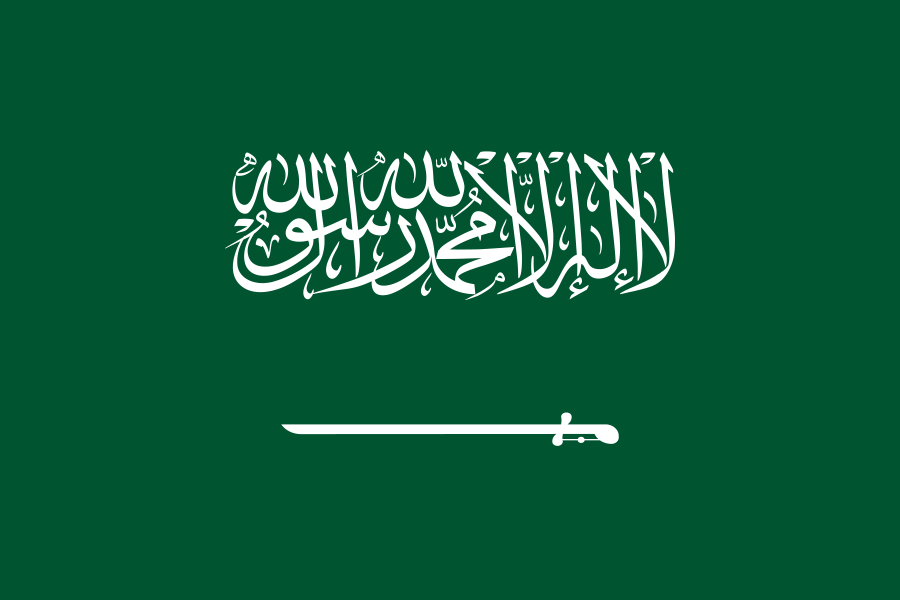
Saudi Arabia at a glance
- Capital
- Riyadh
- Quiz continent
- Asia
- Languages in reference record
- Arabic
- Currency
- Saudi Riyal (SAR)
- Population
- 36,973,555 (2025, World Bank)
- Area
- 2,149,690 km²
- Coastal setting
- Not landlocked
- ISO codes
- SA / SAU
- Internet country suffix
- .sa, .السعودية
- Establishment of the State
- 1932: Establishment of the Kingdom
- Central landscape
- Najad
- Great sandy desert
- Rub al-Chali
- Red Sea port
- Jeddah
- Historical place in Riyadh
- Dirʿiyya / At-Turaif
- Flag marking
- Shahada
Saudi Arabia Flag: Design, Meaning and History
On green ground, the Islamic creed, the Shahadah, is written in white. Below is a white horizontal sword. The flag has no transverse stripes, stars or bordered coat of arms. In small representations, the white writing and the long sword form remain the decisive features; they distinguish the motif from purely green historical flags, for example.
The inscription means that there is no god but God and Muhammad is his messenger. Green stands in Islamic tradition. The state motif is closely linked to the history of the Al Saud dynasty and the founding of the Kingdom in 1932. Both flag views are made in such a way that the font remains correctly legible; it is not usually a mirrored back image.
Capital: Riyadh
Riyadh is located in the central highlands of Najd. The capital is the main political center of the kingdom. Its internal location distinguishes it from Jeddah on the Red Sea and from the port and industrial locations on the Persian Gulf. The comparison explains why the capital is not automatically identical to the largest maritime trading centre or one of the most famous pilgrimage cities.
Near Riyadh is Dirʿiyya with the historic district of At-Turaif, which is on the UNESCO World Heritage List. This place is significant for the early history of Saudi statehood. Mecca and Medina, on the other hand, have a special religious significance. Capital function, dynasty history and religious centrality are different levels that can be viewed separately in a particularly meaningful way in Saudi Arabia.
Practise this capital →Saudi Arabia: Geography, History and Culture
Large desert areas such as the Rub al-Chali characterize the interior of the country. To the west, mountain ranges run along the Red Sea, while the east coast borders the Persian Gulf. Drought does not mean complete scenic uniformity: oases, rocky landscapes, mountainous areas and sand deserts offer different living conditions. The country does not possess permanently water-bearing natural rivers in the usual sense.
Arabic is the official language. The peninsula was a space of trade routes and settlements long before the emergence of the present state. Hegra with its Nabataean tombs and the rock art of the Ha’il region belong to the UNESCO cultural heritage. They show historical layers that are significantly older than the modern oil industry and the founding of the national state.
The historic old town of Jeddah stands for the connections between port trade and pilgrimage to Mecca. The oasis Al-Ahsa shows in turn a long-term cultural landscape. Together, such examples expand the understanding of a dry peninsula: not only raw material deposits, but also water points, traffic routes and religious centers have shaped spatial development over a long time.
Two marine coasts
Saudi Arabia borders the Red Sea and the Persian Gulf. The capital lies between these coastal areas inland.
Hegra as an archaeological site
Hegra has been a UNESCO World Heritage Site since 2008. The Nabataean history connects the place with older trading areas of the region.
Readable writing on both sides
The Arabic inscription must remain legible. The back is therefore not treated merely mirrored as in the case of a simple geometric flag.
Explore neighbouring and related places
 Iraq
 Jordan
 Kuwait
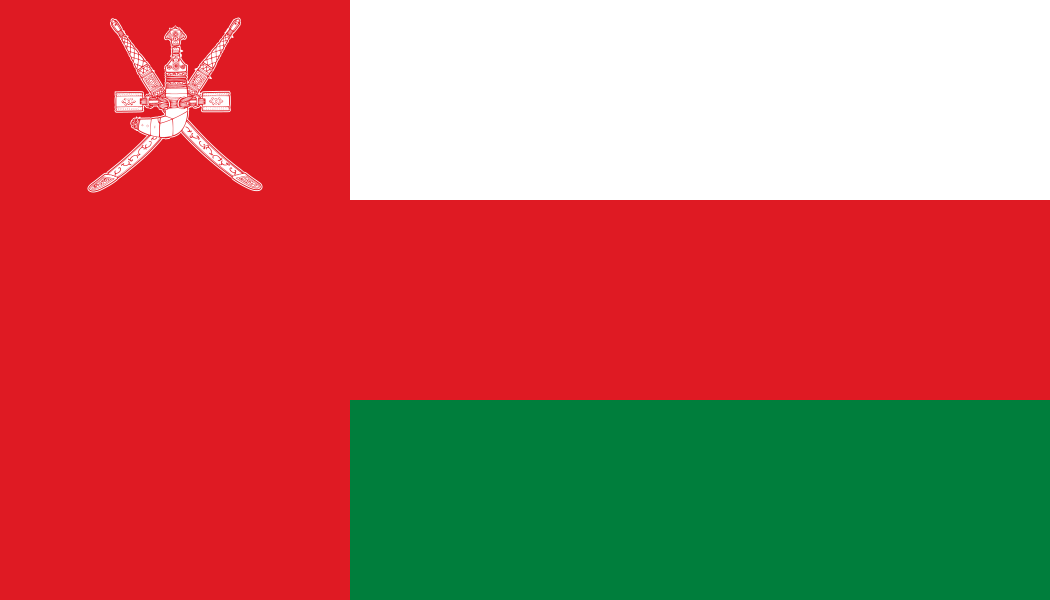 Oman
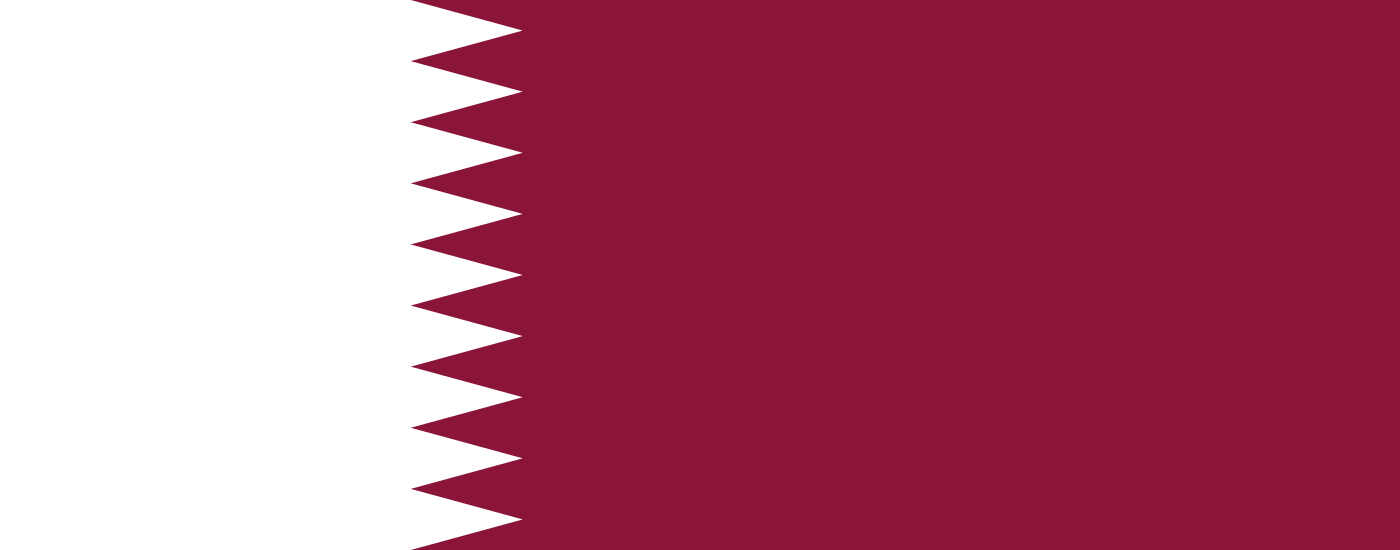 Qatar
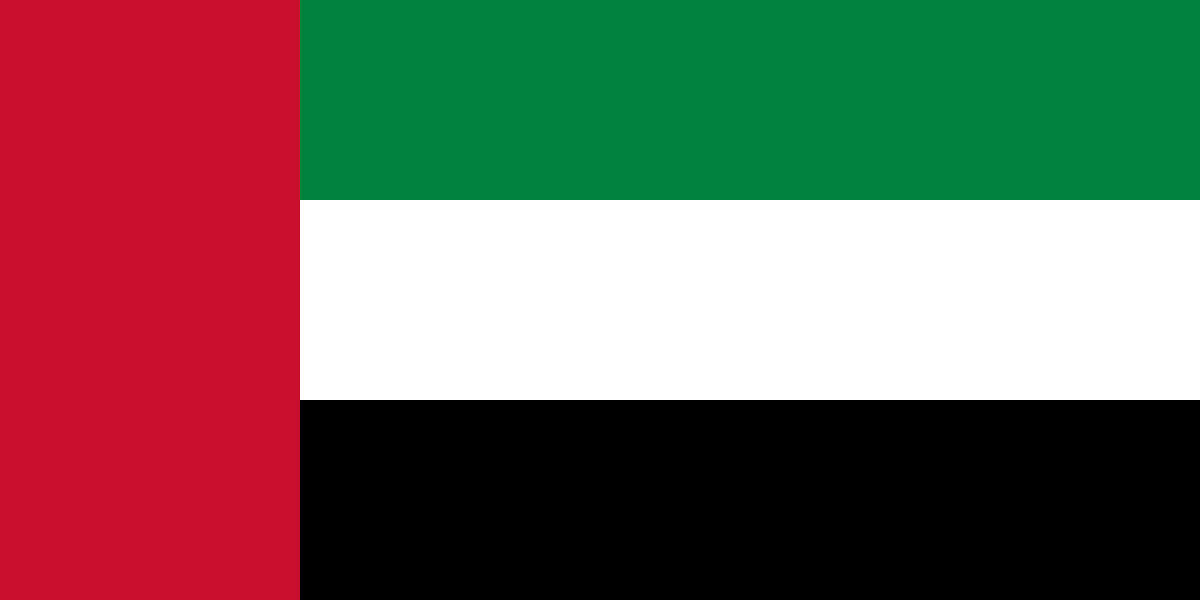 United Arab Emirates
What did you discover?
Sources and image credits
This English article draws on the institutional sources listed below. Figures and memberships retain their stated reference dates.
Source record: 2 November 2026. A translation does not change the reference date of a figure or membership list.
- github.com/factbook/factbook.json/blob/144d6977b2b01ac1cbd220de754c0a005616760b/middle-east/sa.json
- data.worldbank.org/indicator/SP.POP.TOTL
- whc.unesco.org/en/statesparties/sa
- github.com/mledoze/countries