Lisbon: City Flag, History and Identity
Lisbon is located on the wide Tejo estuary and is Portugal’s capital. In the variant included here, the city flag shows black and white triangular sectors with a coat of arms in the middle. The ship and ravens lead to the lore of the city patron, while Baixa, Alfama and Belém make various chapters of the city's history visible on the river.
Test your knowledge →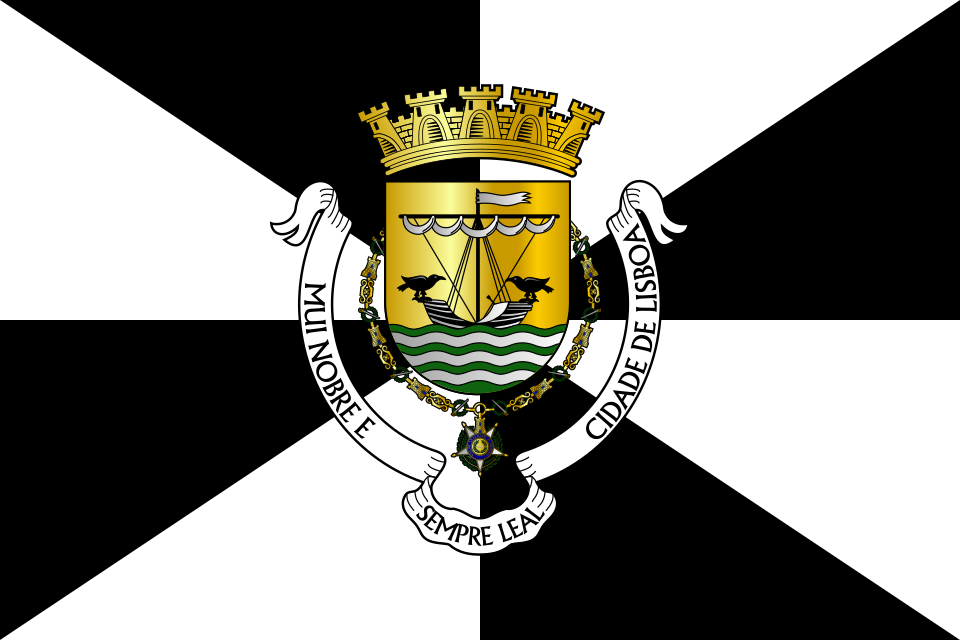
Lisbon at a glance
- Name
- Lisbon
- Country
- Portugal
- Profile type
- City
- River
- Tejo
- Riverside
- Right bank of the Tejo estuary
- Conquest for Portugal
- 1147 by Afonso Henriques
- Great earthquake
- 1755
- Planned reconstruction
- Regular road grid of the Baixa
- Traditional music
- Fado
- UNESCO dual site
- Jerome Monastery and Tower of Belém, since 1983
- Start of construction of the Hieronymus Monastery
- 1502 according to UNESCO
- City patron in the coat of arms
- Saint Vincent
- Modern Quarter
- Parque das Nações
The Flag of Lisbon
The figure has eight alternating black and white sectors that converge towards the center. There stands the golden city coat of arms with a black ship and two ravens. Above the shield appears a golden crown of the wall. It is expressly a black-and-white city flag; green is not a base strip of this variant shown here.
The city administration explains ship and ravens with the legend of the transport of the bones of St. Vincent. The birds are said to have accompanied the way. This religious tradition is to be marked as a legend. The golden crown of the wall with five towers refers to the capital function; the circulating chain of orders is also part of the rich equipment of the coat of arms.
Lisbon: Location and Territorial Role
Lisbon is on the right bank of the wide Tagus estuary. The hilly city and its natural harbour were for a long time connected with trade and seafaring. The present center is not synonymous with the entire metropolitan region. This page covers the city and its local historical spaces, not all neighboring municipalities.
The history extends beyond the medieval Portuguese city. Roman and Islamic phases are also part of this. In 1147, Afonso Henriques conquered Lisbon for the Portuguese kingdom. Over the centuries, the political significance of the place continued to grow. In the case of early capital details, the official representations consulted here differ by one year, which is why no exact appointment year is adopted.
Landscape, History and Culture
The hills and the river characterize different urban forms. Historical districts like Alfama have narrow, winding streets, while the Baixa stands out through a regular plan. These contrasts are not just any variety of styles. They are explained by different phases of development and especially by the reconstruction after the heavy earthquake of 1755, which changed large parts of the city.
The reconstruction of the Baixa followed an orderly, symmetrical grid of roads. Thus, this district stands for a conscious re-planning within the older city. The spatial opening to the river is part of today’s appearance. If you compare different neighbourhoods, you can see different answers to topography, use and historical destruction from their floor plan without having to date each building individually.
Fado belongs to the cultural tradition of the city. The national tourism organisation places this music in the traditional neighbourhoods, among others. At the same time, Lisbon has modern urban spaces such as Parque das Nações in the east. The city portrait thus encompasses both: traditional forms of urban culture and later developed quarters that place other functions and structural standards in the foreground.
Belém on the Tejo
Belém is located west of the centre on the Tejo. The Jerome Monastery and the Belém Tower were jointly included in the UNESCO World Heritage List in 1983. Both buildings are in the historical context of Portuguese seafaring. The World Heritage marking applies to these monuments and their defined spatial context, not automatically to the entire city or the entire river mouth.
Monastery of Jerome
Jerome Monastery is an outstanding example of Manueline architecture. UNESCO mentions 1502 as the beginning of construction of the large monastery complex. Its location in the historical port area Restelo combines architecture with maritime history. A monastery building can thus simultaneously combine religious tasks, royal representation and the memory of far-reaching trade and discovery journeys.
Arquivo Municipal de Lisboa
The City Archives preserves Lisbon’s communal tradition and places local events in the history of Portugal. Its presentation includes conquest, crises, earthquakes and reconstruction. Such a perspective complements the visible buildings with administrative and everyday history. She recalls that behind a striking flag are not only legends, but also documented decisions and profound changes in urban space.
Explore this country and nearby profiles
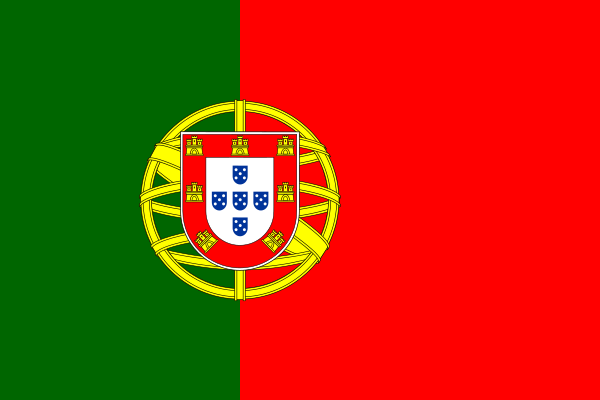 Portugal
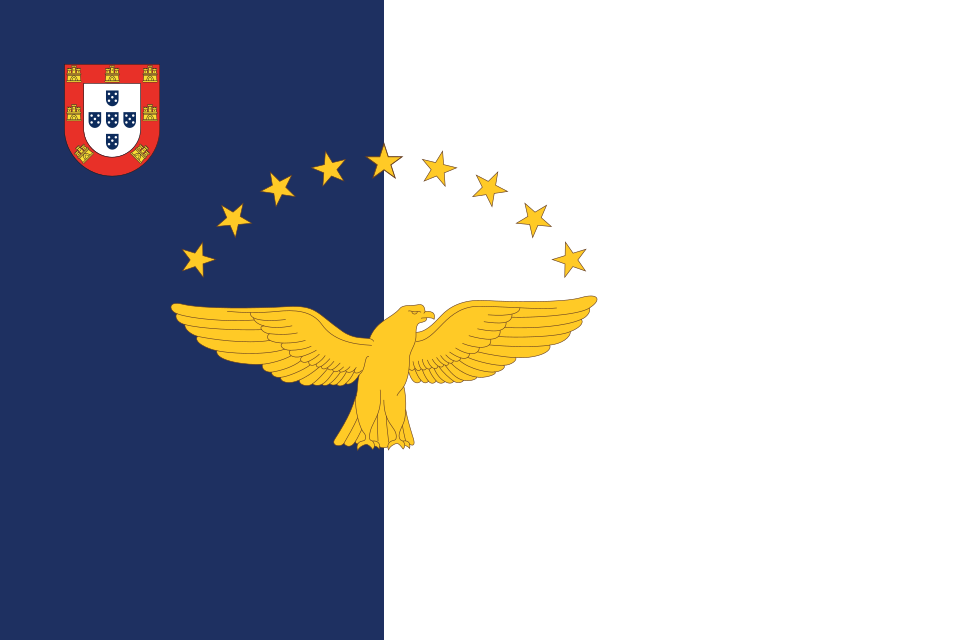 Azores
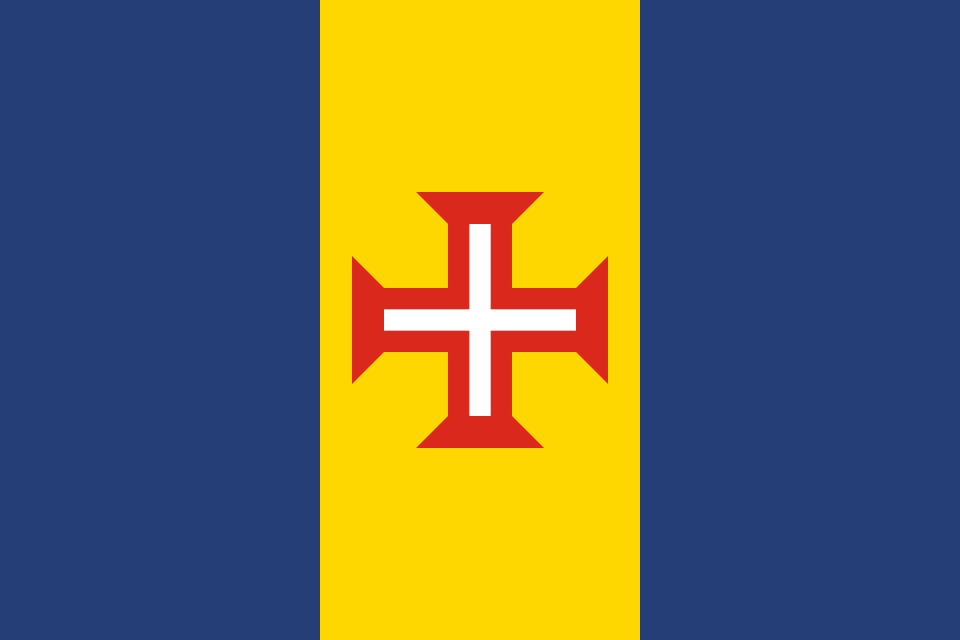 Madeira
What did you discover?
Take this flag into the quiz
Sources and image credits
This English article draws on the institutional sources listed below. Figures and memberships retain their stated reference dates.
Source record: 2 November 2026. A translation does not change the reference date of a figure or membership list.
- lisboa.pt/en/municipality/city-hall/protocol-symbols
- visitportugal.com/en/NR/exeres/98BE771F-120C-4A83-A18B-DFC8C7907F5B
- arquivomunicipal.lisboa.pt/sobre-nos/historia/
- whc.unesco.org/en/list/263/
- museusemonumentos.pt/en/museus-e-monumentos/mosteiro-dos-jeronimos-e-capela-de-sao-jeronimo
- commons.wikimedia.org/wiki/File%3AFlag_of_Lisbon.svg