New South Wales: State Flag, Capital and Regional Profile
New South Wales lies on Australia’s east coast and ranges from coastal landscapes to mountains and dry plains. Sydney is its capital. The state flag belongs to the family of the British Blue Ensigns, but has its own badge. The Blue Mountains show particularly well why the state encompasses much more than its famous port city.
Test your knowledge →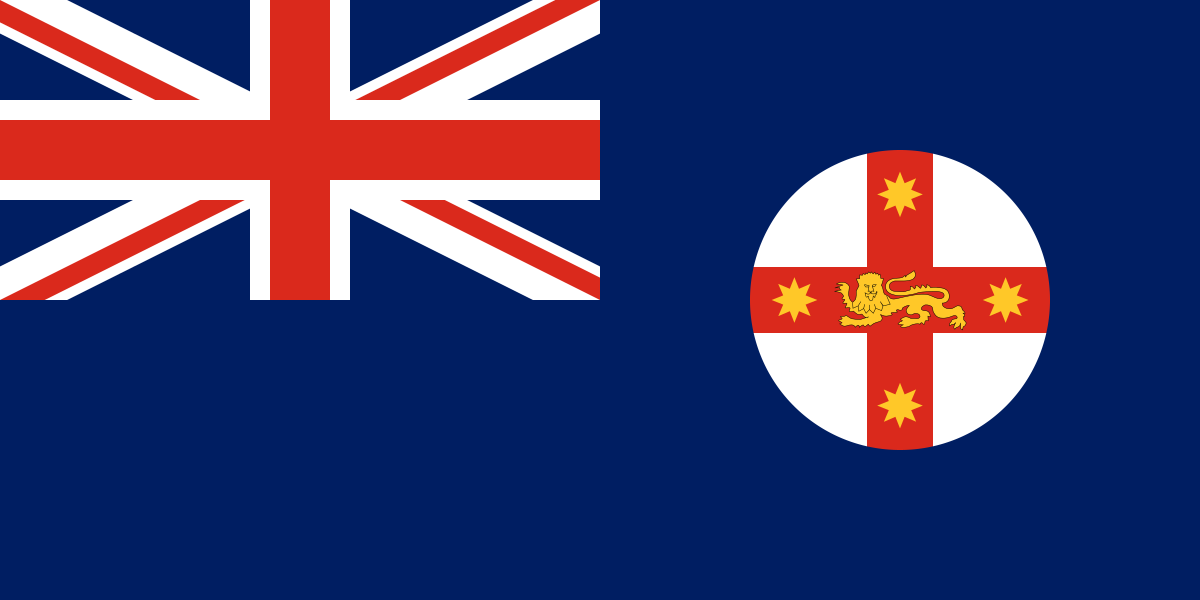
New South Wales at a glance
- Name
- New South Wales
- Country
- Australia
- Profile type
- Australian state
- Administrative seat in source record
- Sydney
- Main geographical areas
- Coast, mountains, central and western plains
- Mountain system
- Great Dividing Range
- Partial mountain range
- Snowy Mountains
- World Heritage Sites
- Greater Blue Mountains Area
- Association of Protected Areas
- Eight areas in the Blue Mountains World Heritage Site
- Rare plant
- Wollemia nobilis
- Flower emblem
- Waratah, since 1962
- Animal emblem
- Platypus, since 1971
The Flag of New South Wales
The dark blue background carries the Union Jack on the top left. On the right is a white disc with a red cross of George, a golden lion in the middle and four golden stars on the arms of the cross. This circularly delimited group of figures is the decisive feature compared to other similarly constructed Australian state flags.
The current badge has been used since 1876. Lion and George's Cross refer to British traditions, the four eight-pointed stars to the Southern Cross. The badge of the flag is easier than the complete state coat of arms, which includes sign holders and other agricultural signs.
New South Wales: Location and Territorial Role
Sydney is on the east coast of the state. The government describes four major geographical areas: coast, mountains, central plains and western plains. This classification is an orientation to natural landscape features and not a list of independent states. It helps to grasp the strong contrast between coastal and inland areas.
The Great Dividing Range’s mountain belt includes the Snowy Mountains and several highland areas. Westwards connect agriculturally used central levels. Further to the west, precipitation becomes scarcer and settlement thinner. The comparatively narrow coastal zone extends from the subtropically influenced north to the cooler southern coastal sections.
Landscape, History and Culture
The Greater Blue Mountains World Heritage Area consists of sandstone plateaus, steep slopes and deep gorges. Large areas carry eucalyptus forests. Its importance lies especially in the diversity of this plant group and the adaptation to different locations. Not only viewpoints, but entire ecological processes and habitat connections are part of the protection value.
An unusual botanical inhabitant is woolmy, scientifically Wollemia nobilis. Their very limited occurrence makes them an important example of ancient, lasting developmental lines of the plant world. In addition to the diverse eucalypts, it shows how very different chapters of Australian vegetation history come together in the same landscape.
The official natural signs of New South Wales include Waratah, Laughing Kookaburra and Platypus. The Waratah has striking red inflorescences and grows in the Blue Mountains, among others. The platypus became an animal emblem in 1971. Such symbols draw attention to concrete habitats and species instead of exclusively to colonial history.
Blue Mountains as an Ensemble
The UNESCO sites comprise eight protected areas. Their value is based on the interconnection of large wooded landscapes, where different plant societies and animals can exist. Sandstone, gorges and forest are therefore to be considered together; a single group of rock only represents a small section of the entire area.
Waratah as a flower sign
The New South Wales Waratah has been the official flower emblem since 1962. Its powerful effect arises from many small flowers and surrounding red bracts. The representation of such a plant in state communication ties in with the local nature, while the flag continues to use the historical colonial badge.
Reading Flag Badges Exactly
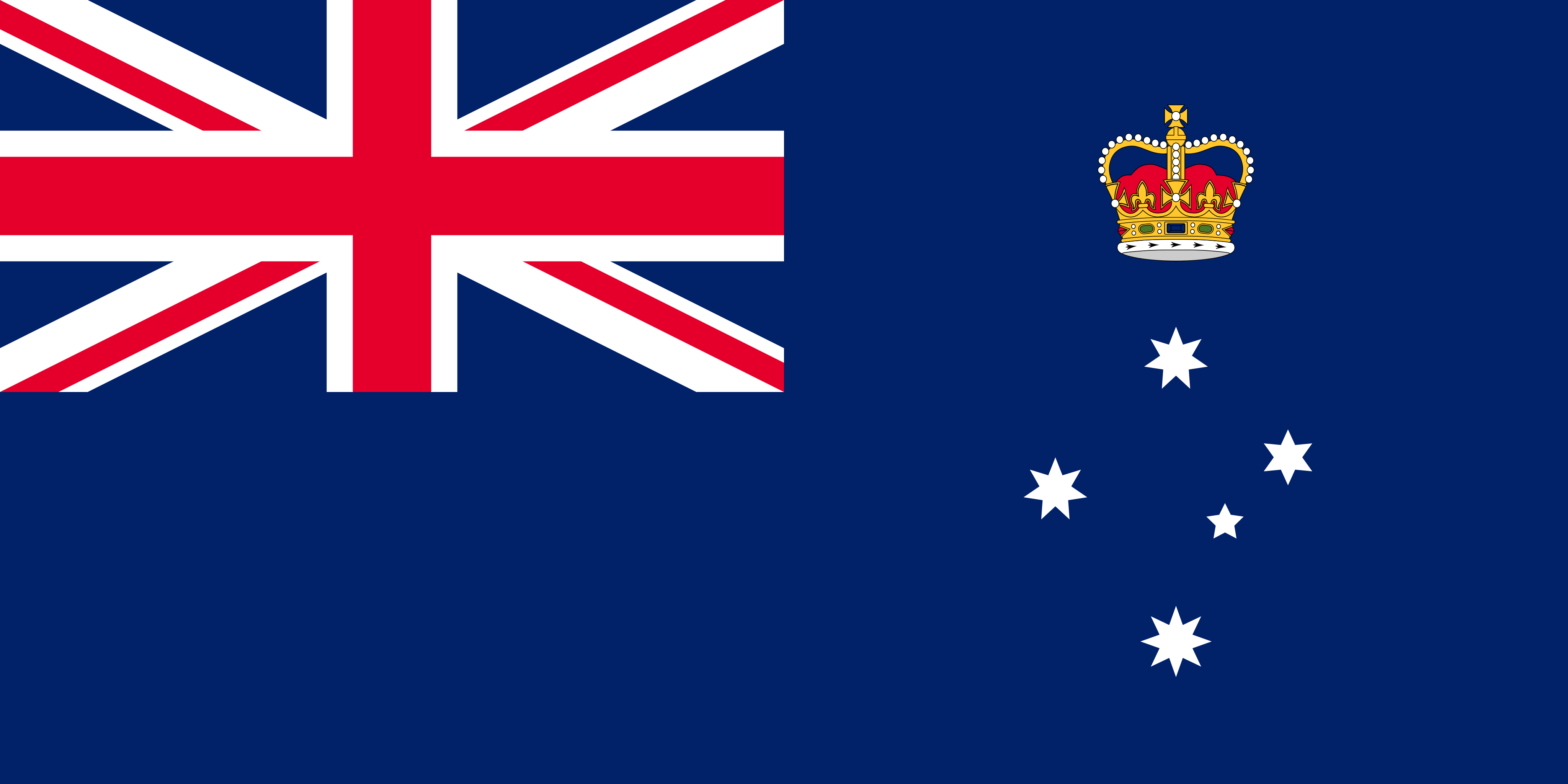
The four stars sit on the arms of the red cross, the golden lion in the center. This creates a compact sign on a white disc. A comparison with Victoria is worthwhile: There the cross of the south appears free on blue under a crown, so without this disk and without lions.
Explore this country and nearby profiles
 Australia
 Sydney
 Victoria
What did you discover?
Take this flag into the quiz
Sources and image credits
This English article draws on the institutional sources listed below. Figures and memberships retain their stated reference dates.
Source record: 2 November 2026. A translation does not change the reference date of a figure or membership list.
- nsw.gov.au/about-nsw/key-facts-about-nsw
- nsw.gov.au/about-nsw/nsw-protocol/state-flag
- pmc.gov.au/resources/australian-symbols-booklet/state-and-territory-symbols/symbols-new-south-wales
- whc.unesco.org/en/list/917