Sweden Flag, Capital and Country Facts
Sweden is located in the eastern part of the Scandinavian Peninsula. Forests, numerous lakes, Baltic coasts and the mountains on the border with Norway characterize different parts of the country. The capital Stockholm was built between Mälarsee and the Baltic Sea. Its water location complements the well-known blue-yellow cross flag with a clear geographical orientation: Sweden is closely connected to inland waters and marine areas.
Test your knowledge →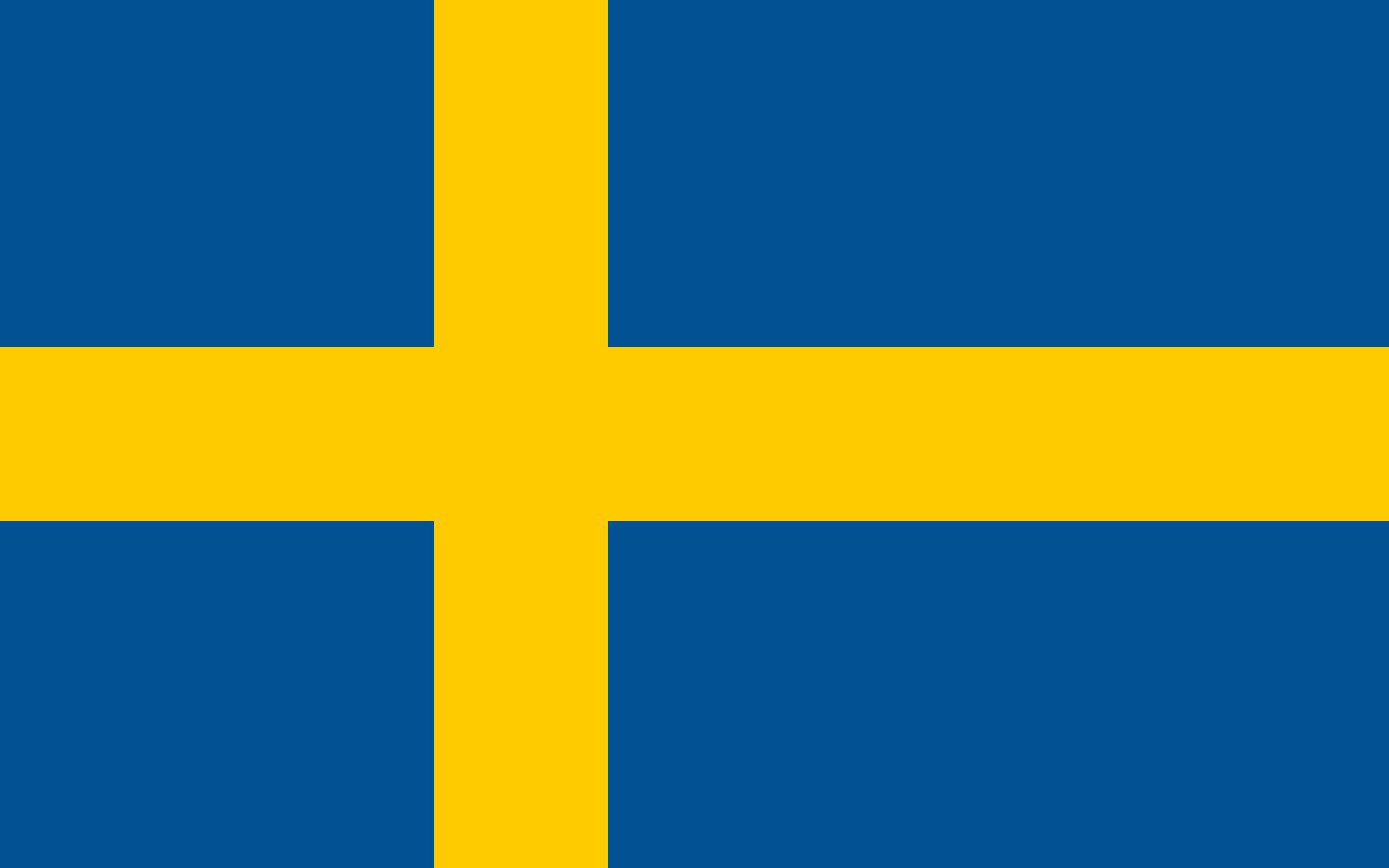
Sweden at a glance
- Capital
- Stockholm
- Quiz continent
- Europe
- Languages in reference record
- Swedish; recognised minority languages including Sami, Finnish and Meänkieli
- Currency
- Swedish krona (SEK)
- Population
- 10,596,620 (2025, World Bank)
- Area
- 450,295 km²
- Coastal setting
- Not landlocked
- ISO codes
- SE / SWE
- Internet country suffix
- .se
- Largest lake
- Vänern
- National holiday
- 6 June
- King's election Gustav Vasas
- 1523
- Sea near Stockholm
- Mallars
- Royal World Heritage Site
- Drottningholm
- Mountains in the West
- Scandinavians
Sweden Flag: Design, Meaning and History
On a blue background lies a yellow cross whose vertical beam is shifted to the hoist side. The crossbars extend to all edges. There is no additional frame. This distinguishes Sweden from Norway and Iceland, whose Nordic crosses consist of two differently colored, interlaced beams.
Blue and yellow follow Swedish coat of arms colors. The Nordic cross formally connects the flag with the other Scandinavian cross flags. The national holiday on June 6 was celebrated earlier than the day of the Swedish flag. The design is therefore a helpful starting point in order to distinguish common Nordic forms and independent national history.
Capital: Stockholm
Stockholm is located on islands and adjacent mainland at the crossing from Lake Mälar to the Baltic Sea. This location creates natural waterways and explains the importance of bridges, ports and ferry connections. The historic old town is only one part of the much larger urban space, whose political and economic functions are spread over numerous areas.
West of the city centre is Drottningholm on Lovön in the Mälarsee. The royal ensemble has been a UNESCO World Heritage site since 1991 and combines castle, gardens and other buildings. It should not be equated with the Royal Castle in Stockholm's Old Town: both are related to the monarchy, but are different places.
Practise this capital →Sweden: Geography, History and Culture
To the west, the Scandinavians form a mountain range along Norway, while larger parts of the south and east are lower. The north extends beyond the Arctic Circle. The Vänern is the largest lake in the country. The many lakes are part of a landscape characterized by ice ages, which also includes ground rock areas and archipelago coasts.
Swedish is the main language. Sami languages, Finnish, Meänkieli and other minority languages point to longer-standing cultural spaces. Sápmi extends over several state borders in the north. A description of the country as fully linguistically consistent would therefore override important historical and regional differences.
June 6 commemorates, among other things, the election of Gustav Vasa as king in 1523 and thus the end of the Kalmar Union for Sweden. The current distribution of population is strongly concentrated in the southern part of the country. Large forest and mountain areas in the north nevertheless have economic, ecological and cultural importance. Area and population density describe different characteristics; sparse settlement does not mean a historyless landscape.
Drottningholm am Mälarsee
UNESCO has been protecting the Royal Ensemble since 1991. The castle, park and theatre are part of a jointly designed historical environment.
Great inland lake
Vänern is located in southern Sweden and is its largest lake. It shows that water geography is not only made up of the Baltic Sea and archipelagos.
Nordic form, own colors
Sweden's yellow cross comes without further borders. This simple difference makes it easier to compare with the multi-colored cross flags of Norway and Iceland.
Explore neighbouring and related places
 Finland
 Norway
Cities and regions in this country
 Stockholm
What did you discover?
Sources and image credits
This English article draws on the institutional sources listed below. Figures and memberships retain their stated reference dates.
Source record: 2 November 2026. A translation does not change the reference date of a figure or membership list.
- github.com/factbook/factbook.json/blob/144d6977b2b01ac1cbd220de754c0a005616760b/europe/sw.json
- data.worldbank.org/indicator/SP.POP.TOTL
- whc.unesco.org/en/list/559
- github.com/mledoze/countries